Following the protests in Ukraine, which began in the wake of the Ukrainian Defence Minister’s resignation, demonstrators have secured the dismissal of the Commander-in-Chief of the Armed Forces of Ukraine, but participants do not intend to stop until the President reinstates the former Defence Minister, Mykhailo Fedorov. Olena Churanova, editor of the StopFake project and fact-checker, told ‘Black Sky’ how Russian propagandists are framing the issue.
In brief:
- On 16 July, protesters in Ukraine took to the streets to oppose the defence minister’s resignation, but the demand for the Commander-in-Chief of the Ukrainian Armed Forces to step down was subsequently added to their list of demands.
- Peskov described the resignation of Ukraine’s Defence Minister as an event of no significance to Russia; however, the Russian media landscape is actively discussing the benefits of this decision for the Russian Federation.
- On 22 July, Zelenskyy issued a decree removing Syrskyi from his post as Commander-in-Chief of the Ukrainian Armed Forces, but the protests continued.
- Russian propaganda Telegram channels are actively promoting the narrative of ‘paid-for’ rallies.
- Propagandists in Russia have labelled the new Commander-in-Chief of the Ukrainian Armed Forces a ‘Nazi’.
What are ‘cardboard rallies’?
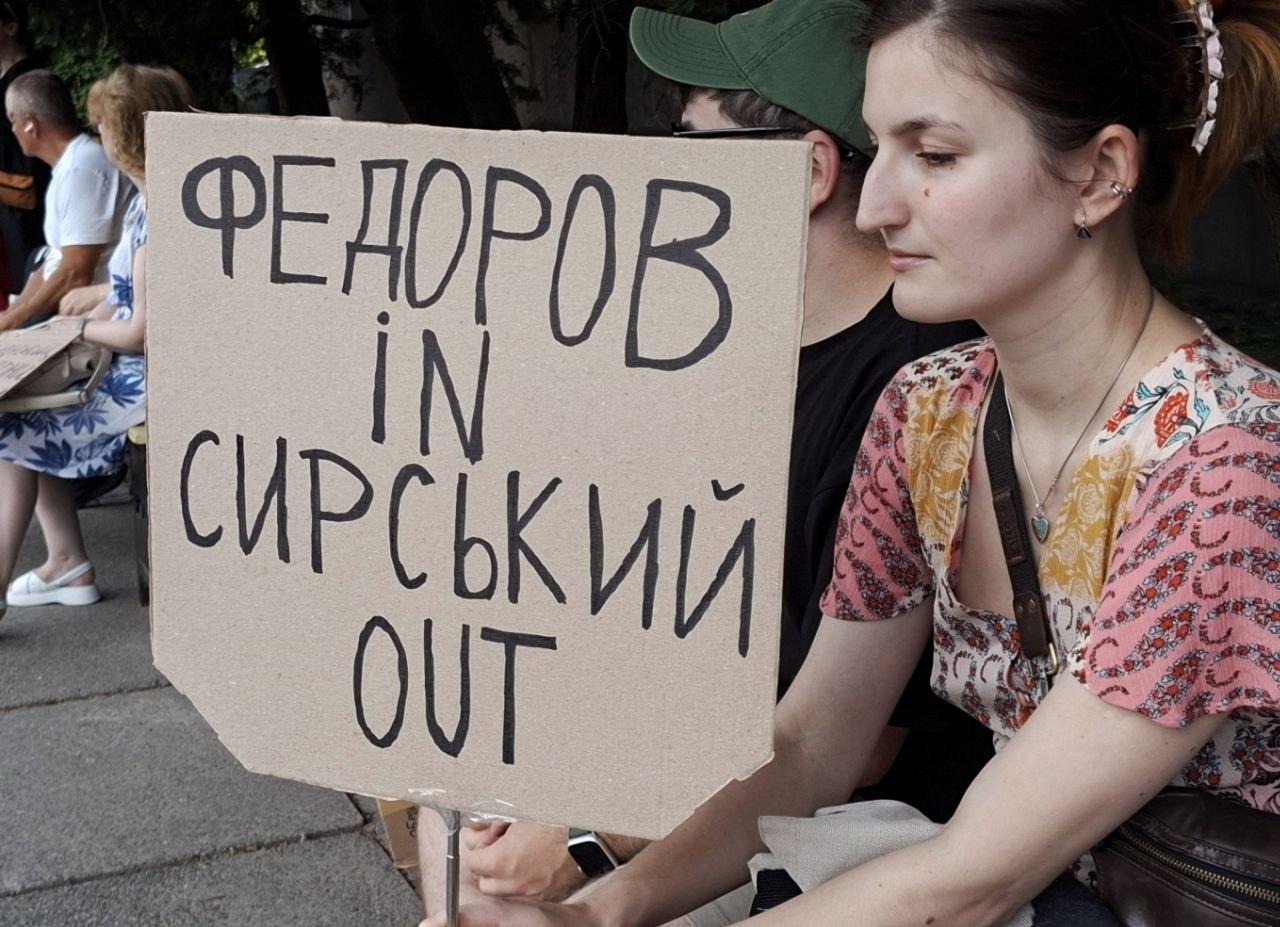
On 16 July, a wave of discontent swept through Ukrainian society following the dismissal of Ukraine’s Defence Minister Mykhailo Fedorov. Despite activists’ claims that the rally was intended to support not Fedorov specifically, but the idea of a progressive army rather than a return to the Soviet-style methods used in the Russian Federation, these accusations took on quite tangible forms.
On the first day, rallies began simultaneously in several major Ukrainian cities (Kyiv, Lviv, Odesa and Kharkiv), but by the very next day, the ‘cardboard rallies’ had spread to almost every city in the country.
Alongside calls to reinstate Fedorov as Minister of Defence came demands to dismiss the then Commander-in-Chief of the Armed Forces of Ukraine, Oleksandr Syrskyi.
On the sixth day of the protests, 22 July, Zelenskyy issued a decree dismissing Oleksandr Syrskyi from his post as Commander-in-Chief of the Armed Forces of Ukraine and appointed Mykhailo Drapatyi in his place. But the protesters did not stop there.
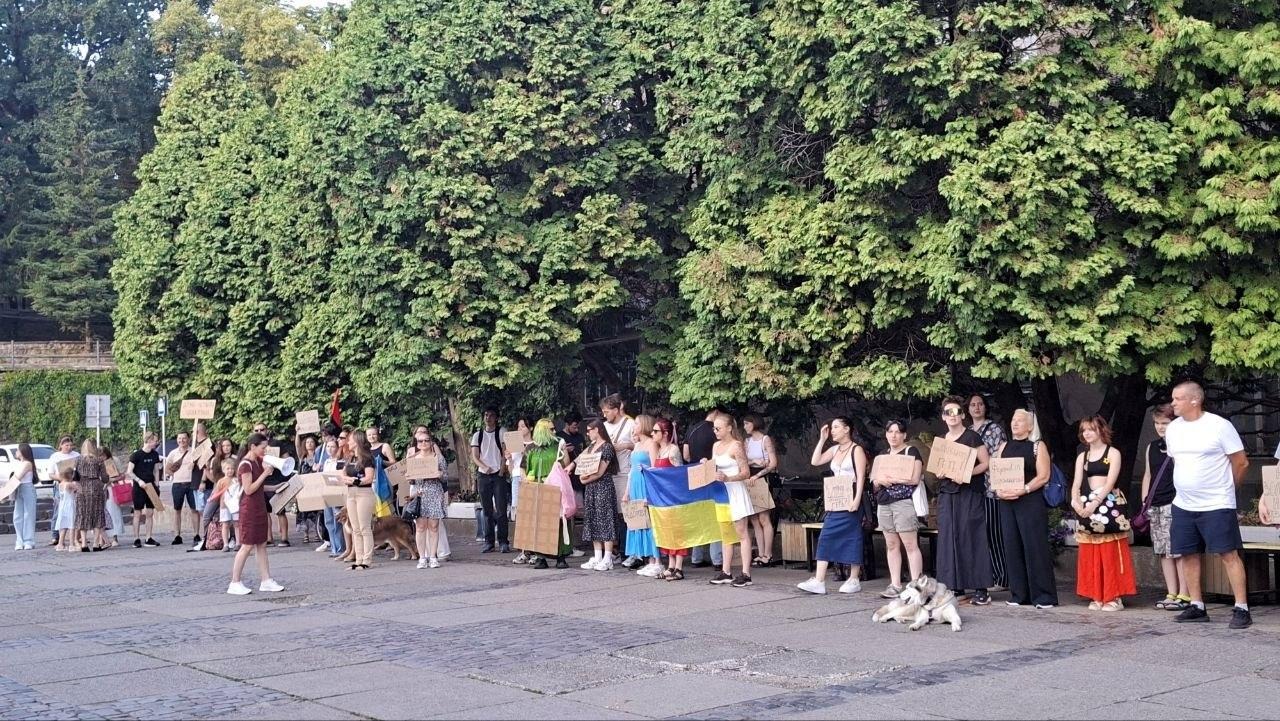
The day after Syrskyi’s dismissal, the co-ordinators of the protests published a post on Instagram stating that the dismissal of the Commander-in-Chief was just one of their demands and that they therefore planned to continue the protests on 24 July unless the other demands were met by then.
And on the morning of that day, a schedule of protests for the day – described as ‘open-ended’ – was published.
How it all began
On 14 July, the Verkhovna Rada of Ukraine endorsed the decision on the resignation of Prime Minister Yulia Svyrydenko. Under the Constitution of Ukraine (Article 115, Part 2), this entails the resignation of the government.
On 16 July, the Verkhovna Rada of Ukraine endorsed the President’s nomination of Serhiy Koretskyi for the post of Prime Minister. On the same day, the newly appointed head of government submitted the composition of the new Cabinet of Ministers to the Verkhovna Rada for consideration.
However, the candidates for the posts of Minister of Defence and Minister of Foreign Affairs are put forward for consideration by the Verkhovna Rada exclusively by the President.
After information appeared online suggesting that Zelenskyy did not intend to reappoint Fedorov as Minister of Defence, Ukrainians spoke out against this decision and took to the streets on 16 July to voice their views.
How Russia reacted to the resignation of the Ukrainian Defence Minister
On 16 July, Kremlin spokesperson Dmitry Peskov responded to questions from journalists at the Russian media outlet Interfax.ru regarding the resignation of the Ukrainian Defence Minister, stating that it made no difference to Russia who served as minister in Ukraine. However, he emphasised that it is important for the Kremlin that there be “someone in Kyiv who will take responsibility and make a responsible decision that will lead to a peaceful settlement or bring the special military operation to an end”, hinting at a decision to accede to Russia’s demands.
However, comments in the Russian media are less restrained. In particular, Russian propagandist Andrei Klintsevich, in an interview with ‘Radio Komsomolskaya Pravda’, states that Fedorov’s dismissal is a positive development for Russia, and mentions the decisions taken during Fedorov’s brief tenure as minister, notably the agreement to block Starlink for Russian users.
Olena Churanova, editor of the StopFake project and fact-checker, explains that the Russian reaction to the protests in Ukraine varied — initially, Kremlin propagandists openly welcomed Fedorov’s dismissal, calling it a ‘gift’ from the enemy and noting that he had been a rather dangerous minister for them.
“One of the high-profile channels even appealed to Musk, saying something along the lines of ‘take your little brother back’. Pro-Russian Telegram channels in the occupied territories and in the Russian-speaking segment also began to mock the minister’s resignation and the people who took to the streets,” — Olena Churanova.
The fact-checker notes that the Kremlin attempted to downplay the protesters’ agency, to use this issue to sow division within society, and to emphasise that Ukrainians are taking to the streets to protest in support of Fedorov purely for money, yet for some reason do not protest against the ‘crimes of the TCC’, the ‘Kyiv regime’ and so on.
What kinds of disinformation and manipulation are circulating around the topic of rallies in Ukraine
The propaganda outlet ‘Inshaya Ukraina’ published an article by Viktor Medvedchuk, which discusses the ‘rules of the Ukrainian Maidan’ and Zelenskyy, from whom power is allegedly being taken away. The article claims that the Maidan ‘never achieves goals in the interests of society’ and that the rallies are organised by ‘Western curators’. Other phrasing is also used, designed to devalue Ukrainians’ struggle for their own interests. For example: “if someone is DRAWN out onto the Maidan – and it could not have been otherwise – then the decision has already been made…”.
Olena Churanova, editor of the StopFake project, explains:
“The main narrative at the moment is that these are ‘paid protests’. Channels such as ‘In Reality in Zaporizhzhia’ wrote that people allegedly ‘stood there for an hour, received 300 hryvnias each and went their separate ways’.” The ‘Zaporizhzhia News Agency’ went further and claimed that the protests were organised ‘on the instructions of the US Democratic Party’, and that participants were paid 50–100 hryvnias each».
The fact-checker notes that the peaceful demonstrations were systematically portrayed as ‘orchestrated’ and ‘coordinated’, with derogatory labels applied to the participants. Fake claims were also circulated about the very purpose of the protests — that people had allegedly taken to the streets because they now feared further abuses by the TCC, and that mobilisation would only intensify under the new leadership. Furthermore, emphasis was placed on the idea that this was effectively ‘Maidan 2’, and that Ukrainians were ready to take to the streets en masse against their own government.
Ukrainian journalist Halyna Hychka published a post on her Facebook page answering the most common questions about the rallies in Zakarpattia, in which, among other things, she addressed the issue of ‘paid-for demonstrations’:
‘People are being paid to protest! But there’s a catch. The currency is “Bdzhilky” sweets! It’s impossible to take accusations of paid protests seriously once you’ve seen all these people with your own eyes. These are people who came up with the placards and slogans themselves and come to the protest every day”, — writes Galina Gychka.
Why Russia has branded the new Commander-in-Chief of the Ukrainian Armed Forces a Nazi
Syrskyi’s dismissal as Commander-in-Chief of the Ukrainian Armed Forces has been described on Russian propaganda channels on Telegram as a tactical move by Zelenskyy, whilst his departure from office is regarded as a grand gesture. However, a barrage of propaganda has already been unleashed against the new Commander-in-Chief. For example, ‘Russia Now. News’ presents a brief biography of Drapatyi, stating that since 2014 he has allegedly been fighting against his own people in the Donetsk region as part of the ‘Black Brigade’.
In 2014, Drapatyi did not merely take part; he was the commander of the 2nd Mechanised Battalion of the 72nd Mechanised Brigade, which has been unofficially referred to as the ‘Black Brigade’ since 2018, when the brigade was named after the ‘Black Zaporozhians’. From April 2014, the entire brigade was stationed in the Donetsk region and was ready to carry out combat missions, according to ArmyInform.
The same channel published an excerpt from an interview with Mykhailo Drapatyi under the headline ‘New Commander-in-Chief Speaks Out’. In fact, the interview was filmed by Ukrainian journalists from the publication Ukraїner long before Drapaty was appointed Commander-in-Chief, as the journalist explains at the start; however, readers are not made aware of this, as the propagandists published only a 20-second excerpt from a conversation that lasts around an hour. Meanwhile, the caption accompanying the video uses quotes taken out of context, which is why the propagandists have labelled Drapaty a ‘Nazi’.
Why is the topic of protests in Ukraine so interesting to Russians?
The editor of the StopFake project explains that the main aim of the propaganda in its coverage of protests in Ukraine is to use the very fact of public discontent to create the impression of social division and undermine trust in the Ukrainian leadership, both for Ukrainians (to suggest that all is lost, in order to demoralise them) and for an external audience (to show that there is no point in supporting Ukraine, and to highlight the instability of the government).
“One of the narratives the Russians are trying to push is that Zelenskyy is supposedly a ‘dictator’ who fears peace, and that a new Maidan awaits Ukraine, so the West should cut funding and arms supplies,” — Olena Churanova.
Yulia Derdyuk
Official Russian and Belarusian sources cited in this text are for informational purposes only. Content from these sources may constitute disinformation or propaganda.