
As soon as Russia begins to have political disagreements with its partners, two tried-and-true tools of pressure come into play: energy resources—with suddenly revised prices and supply terms—and sanitary inspections, which unexpectedly uncover a threat in the products of an overly recalcitrant ally. At various times, wines from Georgia and Moldova, mandarins from Abkhazia, candies from Ukraine, and milk from Belarus have been deemed dangerous for Russians. Now, violations have been found in Armenian cognacs and mineral water.
In brief:
- Russia’s sanitary service has deemed cognac and mineral water from Armenia dangerous. Products linked to businessmen in the inner circle of Armenian Prime Minister Nikol Pashinyan have been banned
- Russia constantly uses Rospotrebnadzor when it needs to put pressure on its partners. The agency finds “violations” in products whose export to Russia is critically important for a given country
- Over the years, Russia has waged trade wars with Moldova, Georgia, Ukraine, and Belarus
- Economist: Many countries in the post-Soviet space are critically dependent on the Russian market. They have long needed to “de-Russify” their economies
Victims of politics
Rospotrebnadzor discovered violations in products from Armenia precisely at the moment when Yerevan began actively building a political dialogue with the EU, and Prime Minister Nikol Pashinyan demonstratively refused to attend Vladimir Putin’s parade. Following the meeting between Putin and Pashinyan in Moscow, where the Armenian prime minister noted that “democracy reigns” in Armenia and no one blocks the internet, Russian health authorities suddenly found violations in Armenian cognacs and mineral water supplied to Russia.
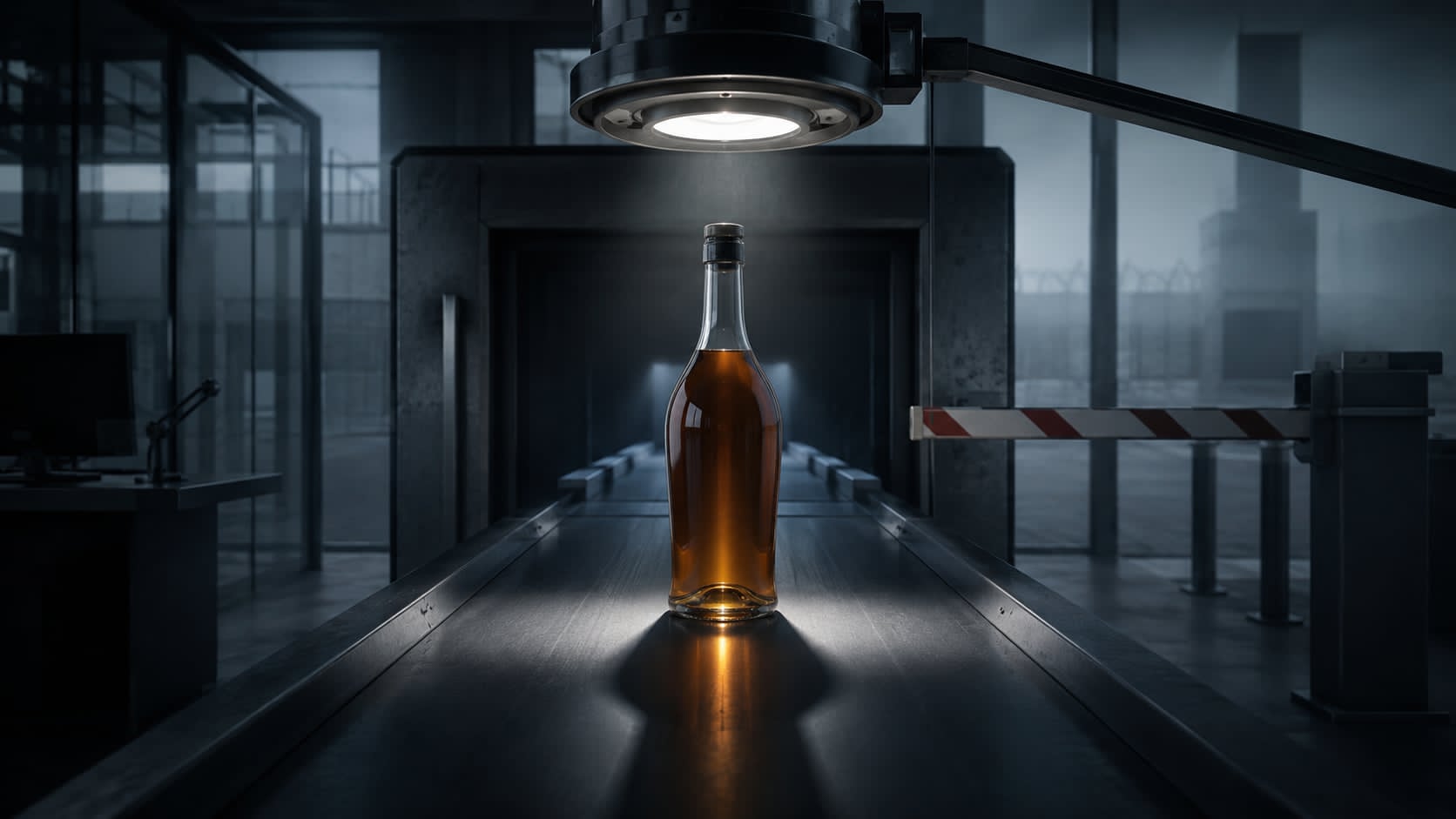
The “Proshyan Cognac Factory” came under particular scrutiny from regulatory authorities. It turned out that this manufacturer’s cognacs are strictly prohibited from being sold in Russia: the beverages contain alcohols not derived from grapes. A procedure has already been initiated that could result in the revocation of the factory’s license. The factory itself, however, claims it has not received any official notifications. The choice of the facility to be inspected appears to be no coincidence: the factory’s owner, Ashot Badalyan, is known in Armenia as Pashinyan’s “personal wallet.”
The second blow fell on “Jermuk” mineral water, produced from October 23, 2025, to February 17, 2026. The reason for the ban was an allegedly excessive hydrocarbonate content, which, according to Rospotrebnadzor, could be harmful to health.
Sales of the water were suspended, with approximately 1.5 million bottles affected by the restrictions. This brand had already faced difficulties with Russian regulatory authorities. In February 2024, vinegar was allegedly found in some bottles instead of mineral water, and sales within Russia were temporarily suspended. And quite coincidentally, this happened a week and a half before Armenian Prime Minister Pashinyan announced a “freeze” on the republic’s membership in the CSTO. The mineral water plant in Jermuk is owned by the Arsenyan family—businesspeople considered close to the current prime minister.
Now Russian authorities are reporting new violations in the supply of Armenian agricultural products and announcing “strengthened phytosanitary controls” at the border. According to a report by Rosselkhoznadzor, 146 cases of contamination by dangerous insects and bacteria have been detected in Armenian fruit and vegetable products since the beginning of the year. During this period, 16,300 tons of goods were shipped to Russia. For Armenian fruit exporters, this is bad news on the eve of the peak shipping season. The Russian market remains key for Armenia’s agricultural sector: it accounts for about half of agricultural exports, and during the season, up to 90% of Armenian fruit is shipped to Russia.
Yaroslav Romanchuk, President of the International Institute of Freedom (Ukraine), economist:
Undoubtedly, Russia is using its sanitary and customs regulations, among other things, as weapons. This is why the term “weaponization” has emerged—when something that is not ostensibly a weapon is turned into one. Russia has long been “weaponizing” its trade with other countries, which is why we see energy, meat, and dairy wars. This works on countries with such authoritarian or oligarchic systems, where the government or major economic actors are tied to a specific market and where they determine the direction of the entire economy.
Call the inspectors
To exert trade pressure on its partners, Russia uses the Federal Service for Supervision of Consumer Rights Protection and Human Well-being—Rospotrebnadzor for short. Its primary responsibilities include monitoring business compliance with laws, inspecting the quality of goods and services, conducting laboratory tests, and preventing and combating infectious diseases. Similar agencies exist in many countries around the world, but sanitary control is by no means used so actively in politics everywhere.
Russia typically wages trade wars according to the same script: as soon as they notice that a country—which Moscow has long regarded as part of its sphere of influence—begins to pursue a more independent foreign policy, talks of rapprochement with the European Union, or simply slips out from under political control, the mechanism of economic pressure is activated.
First comes blackmail with energy resources: threats are made to raise oil and gas prices, revise contract terms, or restrict supplies. Then Russia’s sanitary and phytosanitary services step in. They “accidentally” discover dangerous bacteria, improper composition, or non-compliant packaging specifically in those products for which the Russian market is critically important. And overnight, they ban imports of these products, fully aware that immediate export diversification is impossible.
Over the past twenty years, this mechanism has been used time and again—from Georgia and Moldova to Belarus and Armenia. Formally, the issue was always exclusively about concern for the health of Russians. But, surprisingly, the sanitary vigilance of Russian agencies intensified precisely during periods of political disagreement between Russia and its partners.
The Mandarin War with Abkhazia
In late 2004, Russia suddenly halted the import of agricultural products from Abkhazia, primarily mandarins, the republic’s main export. The decision was explained as being for “sanitary reasons.” According to unofficial reports, Moscow was dissatisfied with the results of the presidential election, which was won by Sergei Bagapsh, who defeated the Kremlin’s favorite, Raul Khadzhimba. Soon, with Russia’s mediation, the political rivals agreed to hold new elections and ran as a single ticket—presidential and vice-presidential candidates. After that, the border reopened for Abkhaz officials.
The Fish War with Latvia
In October 2006, Russia banned imports of canned fish from Latvia, citing the detection of elevated levels of benzopyrene. This occurred against the backdrop of territorial disputes: Riga laid claim to the Pytalovo District of the Pskov Region. The situation was resolved by early 2007, after the parties reached an agreement on a border treaty. Losses for Latvian suppliers were estimated at $10–20 million.
The Wine War with Georgia
In the spring of 2006, Rospotrebnadzor banned the import of wine and mineral water from Georgia into Russia due to non-compliance with sanitary standards. A significant portion of exports, which had traditionally been oriented toward the Russian market, fell under these restrictions.
The decision coincided with sharp statements by Georgian President Mikheil Saakashvili regarding a possible withdrawal from the CIS and the withdrawal of Georgia’s consent to Russia’s accession to the WTO. In early 2013, following the opposition’s victory in the parliamentary elections, the new Georgian authorities agreed to resume shipments.
And the wine war with Moldova
In the summer of 2005, amid escalating tensions over Transnistria, Chisinau tightened control over the region’s foreign economic activity, and Ukraine began allowing shipments through only if they had Moldovan customs clearance. In Tiraspol, these steps were viewed as an “economic blockade.”
In response, Moscow first stopped issuing excise stamps to Moldovan wine suppliers—85% of whose market was in Russia—and then Rospotrebnadzor imposed an official ban on the import of wine and wine materials from Moldova. The ban was partially lifted in July 2007 and completely lifted in July 2009. Moldovan winemakers suffered losses of $180 million.
The “Milk” War with Belarus
In June 2009, Russia imposed restrictions on the import of approximately 500 types of Belarusian dairy products, citing non-compliance with new technical regulations. For Belarusian producers, this was a blow below the belt: of the 6 million tons of milk the country processed at the time, 4 million were exported to Russia.
The ban came after Alexander Lukashenko resumed relations with the European Union: the EU lifted visa restrictions on Belarusian officials and sanctions on Belarusian companies; Lukashenko was invited to European capitals, and foreign politicians traveled to Minsk with IMF funds. In May 2009, Belarus was included in the EU’s “Eastern Partnership” program.
In response to Russia’s decisions, Minsk demonstratively boycotted the CSTO summit in Moscow, where the key issue was the creation of Collective Rapid Reaction Forces.
Within a few days, tensions eased, and Belarusian dairy products returned to the Russian market. However, since then, “dairy” tensions have periodically flared up in bilateral relations.
The “Cheese” and “Chocolate” Wars with Ukraine
Trade pressure on Ukraine peaked in 2012–2014, when Kyiv was negotiating with the EU and preparing to sign the Association Agreement with the European Union.
Starting in 2012, Rospotrebnadzor launched a series of inspections of Ukrainian cheeses, alleging the possible use of vegetable fats instead of dairy ingredients. Russian inspectors even visited Ukrainian facilities, but they never found any palm oil in the products. By the end of 2014, imports of Ukrainian cheeses into Russia were completely banned.
In 2013, Russia launched a “chocolate war” against the company Roshen, whose owner, Petro Poroshenko, was an active advocate for Ukraine’s European integration. Hazardous substances were found in the candies, and the Ukrainian manufacturer effectively lost one of its largest foreign markets, which had previously accounted for a significant share of the company’s exports. Russia’s CIS partners—Belarus, Kazakhstan, Tajikistan, and Moldova—were also compelled to inspect the quality of the Ukrainian corporation’s products. But a united front did not materialize: these countries had no complaints about the Ukrainian candies.
Yaroslav Romanchuk, President of the International Institute for Freedom (Ukraine), economist:
Many post-Soviet countries are critically dependent on Russia. They are, in effect, putting their own heads into this Russian jaws. Russia exploits not only this shared economic dependence but also uses those who were its economic insiders to exert other forms of influence in these countries, particularly when such individuals enter government structures or security agencies. We are seeing this right now in Georgia and in Central Asian countries; until recently, the same thing was happening in Armenia.
I believe that countries like Armenia and Belarus need to “de-Russify” their trade. Not only in the sphere of traditional goods, but also in energy and strategic sectors of the economy. They need to gradually adopt European standards and try to operate in these markets.