
Russians are showing increasing weariness with the protracted war. New data from both non-public and independent opinion polls reveal the highest levels of anxiety in years and a decline in trust in Vladimir Putin. Behind these shifts lie economic pressure, inflation and the everyday consequences of the fighting on Russian soil.
In brief:
- Russians are increasingly calling for an end to the war: domestic polls indicate a growing demand for peace, and around a third of respondents can envisage a future for Russia without Putin.
- Trust in Putin is waning: in a new poll by the Ukrainian Sociological Portal, he ranked only fourth for trust, behind Sobyanin, Mishustin and Belousov.
- Economic problems are becoming a reality for ordinary Russians: 75 per cent of those surveyed reported a deterioration in their families’ financial situation, while petrol shortages and kilometre-long queues at petrol stations show how the war is reaching into everyday life.
- At the same time, there are no mass protests against the authorities: Russians may be war-weary and dissatisfied with the economic situation, but repression and the absence of genuine political competition stop that discontent from turning easily into protest.
- The September elections to the State Duma will be a test for Putin’s system: formally, Russians will be electing 450 deputies, but with no real opposition on the ballot the vote is more a test of public loyalty and of the scope for protest voting than a genuine political contest.
In Russia, the number of people calling for an end to the war against Ukraine is growing. Internal opinion polls suggest that this mood is becoming more pronounced. This was recently reported by RBC-Ukraine, citing a video address by Ukrainian President Volodymyr Zelenskyy. According to Zelenskyy, Ukraine has data from polls inside Russia indicating a rise in the number of Russians (over 60 per cent of Russian society) who want the war to end. The president believes that this shift is not enough, and that public demand for an end to hostilities must grow stronger. “We have data from internal polls in Russia showing that the number of people there who would like to see an end to the war is already growing. And this needs to be even more pronounced,” said Zelenskyy.
Is there really a growing demand for change in Russia — and to what extent does this threaten the current system?
The Ukrainian president added that a hardening of such sentiment should register not only with the dictator Putin, but also with his inner circle and the Russian state apparatus. “So that Putin and his administration, his FSB officers, and everyone else in the aggressor state understand equally clearly that there is no alternative but peace,” emphasised Zelenskyy.
It is also worth recalling that the North Korean government continues to supply Russia with weapons for the war against Ukraine, and that Pyongyang could use the combat experience it gains to develop and refine its missile technologies.
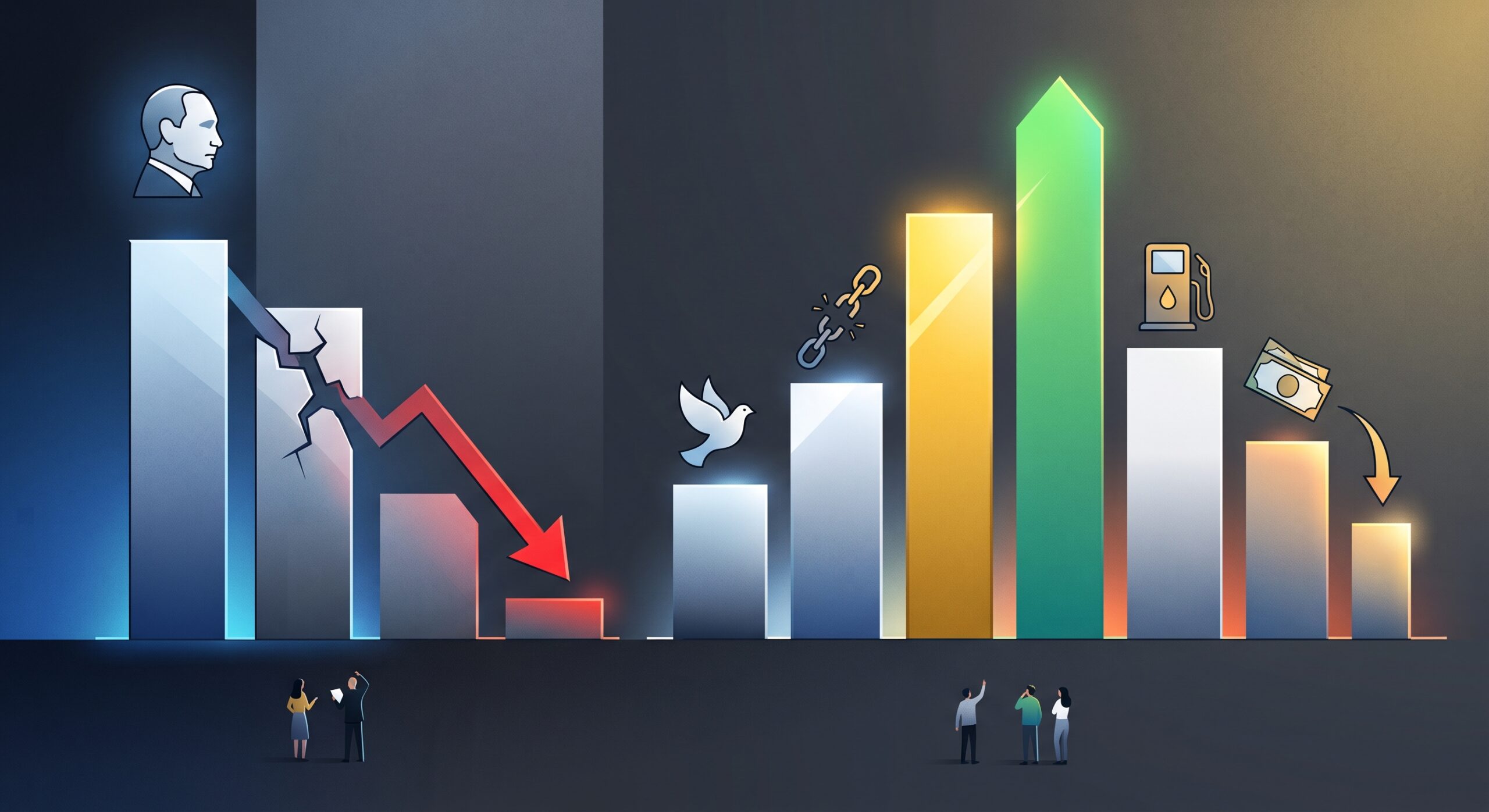
Some 86.2 per cent of Russians believe the country is heading in the wrong direction, while three-quarters report a deterioration in their families’ financial situation. Vladimir Putin, meanwhile, ranked only fourth in the trust ratings. These results were published by the Ukrainian Sociological Portal following a survey conducted between 1 and 7 August 2026.
According to the survey, only 10.1 per cent of respondents believe that Russia is moving in the right direction, while 86.2 per cent take the opposite view. Half of those asked, 50.5 per cent, describe the situation in the country as categorically negative.
Economic sentiment points the same way. Three-quarters of respondents, 75 per cent, said that their families’ finances had worsened over the past year, and 30.8 per cent described the deterioration as significant. Only 9 per cent saw an improvement.
The political trust ratings also merit attention.
Asked in an open question which politicians they trust most and consider capable of improving the situation in the country, respondents put Moscow Mayor Sergei Sobyanin first, on 48.3 per cent.
He was followed by Prime Minister Mikhail Mishustin on 35.1 per cent and Defence Minister Andrei Belousov on 33.8 per cent.
Vladimir Putin came only fourth, with 32.9 per cent, according to the Ukrainian Sociological Portal.
The result matters for more than Putin’s own decline in popularity. It points to a possible demand within part of Russian society not for radical change to the system, but for different leaders inside it. In other words, dissatisfaction may be voiced not as ‘change the regime’, but as ‘we need a different leader who will run the country better’.
What do Russians want?
Among the respondents’ main wishes are peace, democracy and prosperity.
Peace was cited as a priority by 71.5 per cent of those surveyed, democracy by 63.4 per cent and prosperity by 61.6 per cent.
Some 34.2 per cent believe that Russia’s future may lie in a country without Vladimir Putin. That is a striking figure, but it should not be read as a readiness on the part of a third of the population to take to the streets or to oppose the Kremlin openly.
Russia remains a state that represses the political opposition and anti-war activists severely. The gulf between private discontent and a willingness to protest in public is therefore vast.
This is where the results of the new study need to be set against other sociological data.
July polling by the Levada Centre showed that overall support for the Russian authorities remains high. Among those who believe the country is heading in the wrong direction, however, disapproval of Putin’s actions runs much higher, and that is especially true of less well-off citizens.
There is another sign worth noting. According to the same Levada Centre, in June 2026 roughly two-thirds of Russians believed that it was time to move towards peace talks over the war against Ukraine, yet a majority continued to declare their support for the actions of the Russian military. That contradiction is essential to any basic understanding of Russian society: a Russian citizen can support the army, consider themselves a patriot and still want the war to end, because the war is having a growing impact on their own life.
The economy could become a source of discontent
A decline in living standards is one of the greatest potential threats to the Kremlin. The war has allowed the Russian authorities to raise military spending sharply and to prop up parts of the economy through state contracts. The model has another side, however: a heavy budgetary burden, inflationary pressure, labour shortages, rising taxes and the economy’s growing dependence on the military sector.
The Moscow Times, in its analysis of the Russian economy for 2026, also wrote about the risk of a shift from a ‘managed cooling’ of the economy to stagnation against the backdrop of the war, higher taxes and slowing growth. Economic problems do not, in themselves, create a political crisis. The Russian authorities have considerable resources with which to offset discontent, from social benefits and public-sector wages to military contracts and propaganda.
What is happening to trust in Putin?
Some surveys do indeed show a gradual decline in trust in the Russian leader. For example, in May, the Levada Centre estimated Putin’s trust rating at 40 per cent — 8 percentage points lower than in November 2025. That does not necessarily mean he has lost control of the system. Even if Russians are showing growing signs of fatigue, economic discontent or a desire for the war to end, none of that translates automatically into political opposition. The conditions for normal competition between the authorities and the opposition barely exist in Russia. The ‘Yabloko’ party is a case in point: in August 2026 it appealed to the Russian Supreme Court against a ruling that had blocked the registration of its federal list for the State Duma elections. It would therefore be premature to suggest that ‘Russians have risen up against Putin’. The findings of the Ukrainian Sociological Portal should also be treated with caution. Its methodology differs from that of the Levada Centre’s regular polls, and its results on the country’s direction are far starker than those of other studies. The figures are best read as a sign of a possible rise in discontent, rather than as evidence of an inevitable political crisis in Russia. The key question now is not merely whether Russians are dissatisfied with Putin, but whether that dissatisfaction is ready to move from private disappointment to political action. So far, there is no sign of large-scale protest.
Russia without petrol: when the problems of war become personal
There is another symptom that is becoming ever harder to hide from Russians themselves: the fuel shortage. In August, the crisis flared up again. In at least ten regions, the authorities have once more imposed restrictions on petrol sales. In the Moscow region, drivers reported long queues, and at some petrol stations there was no petrol at all. Reuters reported that queues at some Moscow petrol stations stretched for a kilometre. Major Russian oil companies have already restricted sales: Gazprom Neft has set limits of up to 40 litres at self-service petrol stations and up to 60 litres at standard ones, while Rosneft has capped purchases at 30 litres per vehicle.
The situation is so serious that the Russian government has not only banned petrol exports but has also begun importing petroleum products to make up for the shortfall on the domestic market. For a country that has spent decades presenting itself as an energy superpower and a major exporter of oil and fuel, that is a telling sign.
There are several reasons for this: a seasonal rise in demand, maintenance and shutdowns at oil refineries and the consequences of Ukrainian strikes on Russian oil infrastructure. After the situation had partially stabilised in late July, fresh attacks on refineries in late July and early August triggered a new wave of shortages. The significance here is not only economic. Petrol is the point at which the war stops being a television image and reaches the individual directly. You do not need to read economic reports to grasp the problem when you have to queue for hours at a petrol station or drive to another one in search of fuel.
Discontent is already spilling over into the public sphere. In Volgograd, five local residents recorded a video appeal to the head of the Russian Investigative Committee, Alexander Bastrykin, over the petrol shortage and what they described as the privileges enjoyed by officials. One of the participants was later fined 10,000 roubles after the video message was deemed an ‘unauthorised mass gathering’. The example is small but instructive: discontent may grow not out of abstract politics, but out of entirely everyday matters — petrol, prices, the availability of goods and household incomes.
State Duma elections. What to expect
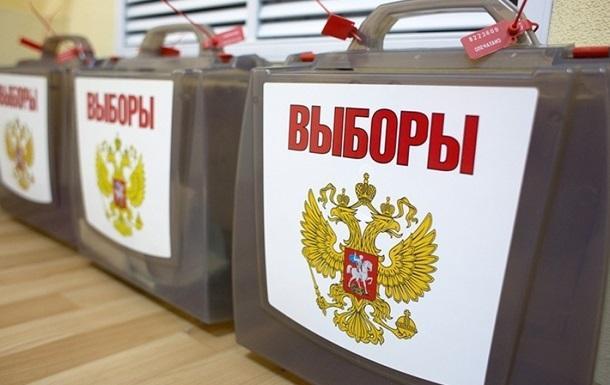
Another factor that could make this autumn politically interesting in Russia is the State Duma elections. Voting is scheduled for 18–20 September 2026, with 20 September the main polling day. A total of 450 deputies will be elected: half from party lists and half in single-member constituencies, as reported by Radio Free Europe/Radio Liberty. Formally, these are elections, but they are hard to call a fully fledged democratic contest. For years the Russian authorities have been clearing the political arena of any real opposition. Candidates can be barred over administrative or criminal cases, while independent political forces operate under severe restrictions. Yabloko, for example, challenged the decision to bar its federal list from the elections. The September vote will therefore be more a test of Putin’s system than a real choice between different models for Russia’s future. What is worth watching is not the result, which is largely predictable, but the turnout, protest voting, voter sentiment and the way the authorities respond to any sign of discontent. That is especially so against a backdrop of petrol shortages, rising war costs and the decline in living standards highlighted in the recent poll.
The Russian authorities may therefore approach September with a contradictory picture: formally, control over politics remains intact; informally, economic and social grievances are mounting. And while Russian voters cannot realistically change the government at the ballot box, that does not make them any less dissatisfied. The only question is where and when that dissatisfaction finds an outlet.
Author: Svitlana Mialyk