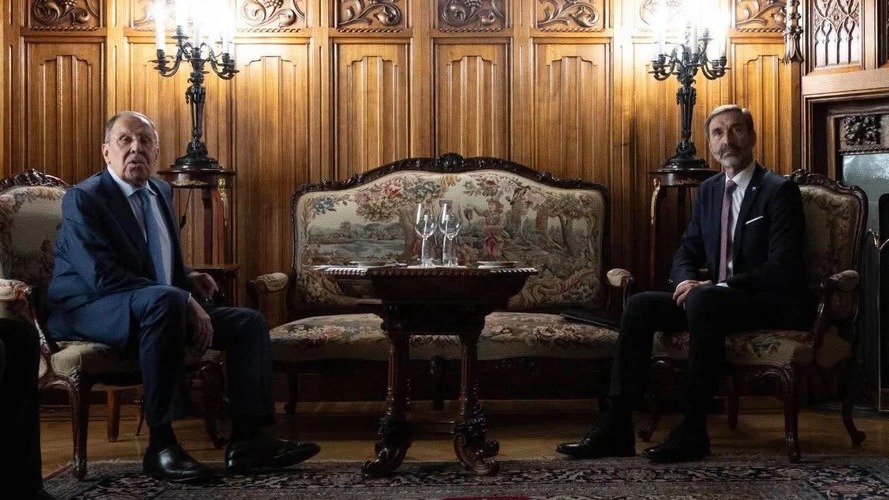

An afterword to the visit of Slovakia’s Foreign Minister Juraj Blanár to Moscow
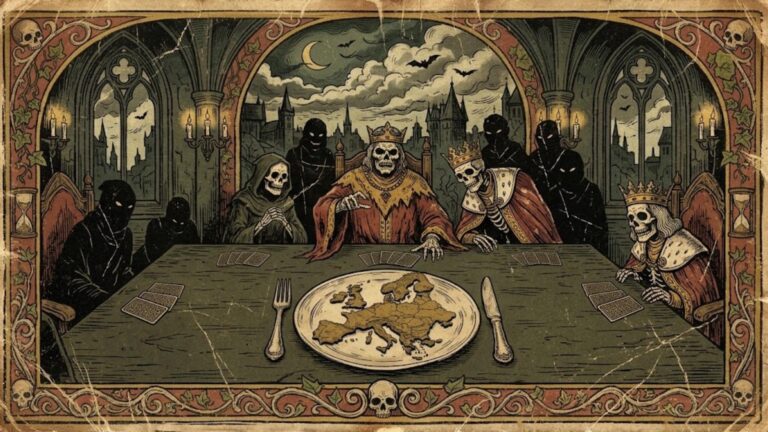
The rapid and systematic destabilisation of the domestic political situation and the ideological “accompaniment” of social confrontation in a number of Europe’s most powerful countries (France, Italy, Germany, Poland), which we have been observing in recent weeks, ought to convince even the most ardent advocates of appeasing Russia that the “alpha and omega” of its current leadership is the complete break-up of the European Union, the prevention of political unity among the states of the continent, and the restoration to Moscow of the role of “gendarme of Europe”, familiar to it since the 19th century.
It was precisely for this purpose that the Kremlin unleashed a war aimed at destroying Ukraine as an independent state – the forward bastion of the defence of European democracy – and a genocide against its people, as well as a large-scale hybrid war against most of Europe’s most politically influential and economically and militarily powerful countries.
In brief
- Minister Blanár’s visit to Moscow is one of those steps aimed at breaking up the European community
- Running to Moscow and begging for deals with a regime that kills innocent people every day is immoral
- Slovak politicians are demanding explanations from the Foreign Ministry regarding the actions of Russian intelligence services in Europe and information about a Russian sabotage network run from Slovakia
- The Slovak government is the main source of the spread of Russian narratives about the war in Ukraine
- Slovakia has become the only NATO country to have restored diplomatic relations with Russia at the level of defence ministry representatives
To realise its imperial ambitions, Moscow has always sought collaborators among the political elites of European countries and has never spared money to finance their divisive efforts. Recently, until April 2026, the epitome of Moscow’s oprichnina was Hungary’s long-serving Prime Minister Viktor Orbán, who, to the best of his abilities, blocked the EU’s unity of action in the confrontation with Muscovy. After the crushing defeat of the pro-Moscow politician in this year’s parliamentary elections and the coming to power in Budapest of Péter Magyar’s Euro-centrist government, the hub of political influence in the EU has become Slovakia, whose Prime Minister Robert Fico time and again goes in person to rendezvous with the bloody Putler and sends government delegations to Moscow so as not to lose support among the pro-Russian segment of the Slovak electorate.
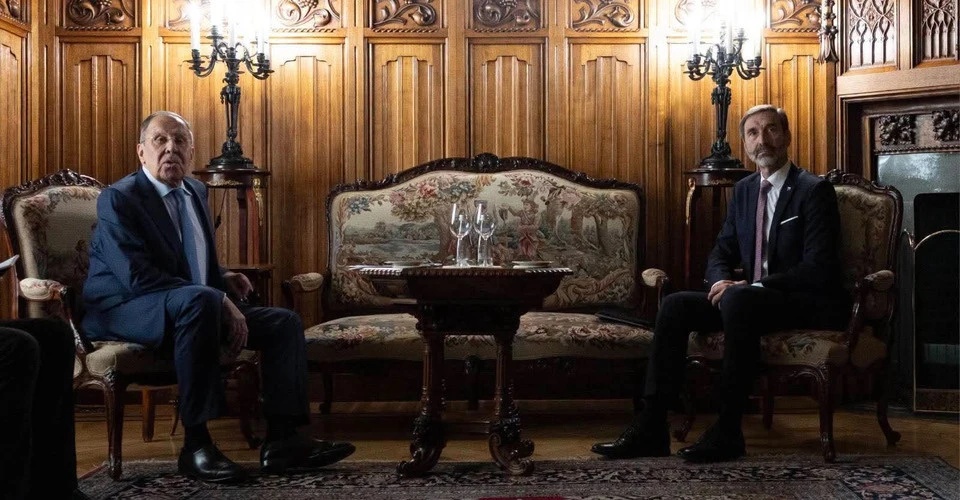
The visit to the capital of the “Evil Empire” by Slovakia’s Foreign Minister Juraj Blanár, which took place on 26 October this year, and his meeting with his Russian counterpart Sergei Lavrov are, beyond any doubt, one of the links in this long chain aimed at breaking up the unity of the EU.
Despite official Bratislava’s statements that the purpose of the visit was the delegation’s participation in a meeting of the Russian-Slovak intergovernmental commission, whose activities had been frozen after the start of Russia’s full-scale invasion of Ukraine in 2022, and the discussion of economic and energy cooperation, in particular supplies of oil, gas and nuclear fuel, Slovak politicians and experts sharply criticised the visit, considering that it helps the occupying country break out of its political isolation, and that Slovak cooperation with Moscow is an example of the end of the taboo on economic dialogue between the EU and Russia.
Minister Juraj Blanár himself stated that the absolute priority of his visit to Moscow was Slovakia’s energy security, since, in accordance with a decision of the European Commission, Bratislava will be forced to stop purchasing Russian gas in September 2027. At the same time, Slovakia has a contract with Russia, concluded through the state-owned company Slovenský plynárenský priemysel (SPP), running until 2034 on “take or pay” terms – meaning that Slovakia faces having to pay the Russian side compensation of more than 16 billion euros.
The minister also stressed that Slovakia seeks to maintain a pragmatic dialogue with Moscow in areas not covered by European Union sanctions, protecting its own economic interests.
Slovak opposition politicians called the visit a step towards collaboration and the betrayal of Slovakia’s national interests amid Russia’s intensifying aggression against Ukraine, and sharply criticised the trip, especially because of the planned strengthening of the Russian diplomatic presence in Slovakia, as Bratislava and Moscow have already restored the presence of military attachés in each other’s embassies.
In particular, Veronika Remišová, a member of the National Council of the Slovak Republic from the For the People party, is demanding that Slovakia’s foreign minister explain the actions of Russian intelligence services in Europe and provide information about a Russian sabotage network run from Slovakia, as well as about a possible expansion of the Russian diplomatic presence. She is demanding that the minister explain whether he raised in Moscow the issue of Russian espionage and sabotage operations against Slovakia and its NATO allies.
The deputy chair of the opposition parliamentary party PS (Progressive Slovakia), Ivan Korčok, called the visit a gross violation of the country’s interests and announced his intention to initiate the official’s dismissal. “This is a violation of the country’s interests and undermines its reputation in the world. We know exactly what Blanár is going to Moscow to negotiate. He will ask Lavrov to allow 30 Russian citizens to work in our embassy in Moscow, and in return he will offer permission (!) for the Russians to send their ‘diplomats’ to Bratislava,” he said.
Former diplomat Ivan Novotný of the SaS (Freedom and Solidarity) party also said that Blanár intends to negotiate the lifting of the cap on the number of Russian diplomats in Slovakia. His party warned against strengthening Russian intelligence services and announced that it would file a criminal complaint on suspicion of high treason if the cap is lifted.
MEP Ľubica Karvašová suggests that Blanár returned from Moscow not as Slovakia’s foreign minister but as a spokesperson for Russia’s Gazprom. “Instead of defending Slovak interests, he is scaring citizens with a 16-billion arbitration. So much for the results of the Slovak-Russian economic commission! But what do the facts say: 1. Russian gas is not cheap. Since we are still buying it, our prices should look different; 2. Russia already restricted gas supplies in 2022, and Austria succeeded in arbitration in its dispute with Gazprom and won more than 230 million euros; 3. Russian gas is to come to an end in the EU. The ban on pipeline gas imports will apply to long-term contracts from 30 September 2027. These rules also apply to Slovakia. Will we be the only ones in the EU to break them?; 4. Diversification is already our obligation. New EU legislation requires member states to prepare plans to replace Russian gas. The deadline for submission to the European Commission was 1 March 2026. What is the Slovak plan, and what is the government doing specifically for our energy security?
“But there is another, fundamental dimension: ordinary humanity. Running to Moscow and begging for deals with a regime that kills innocent people every day is immoral! Just today in Ukraine a Russian missile killed two 15-year-old girls. Why does Fico’s government, instead of consistently defending our interests and cooperating with partners in the EU, once again choose a go-it-alone approach and voluntarily make Slovakia Moscow’s hostage?”
Juraj Krúpa (SaS) described the visit as “appalling and unpleasant”. In his view, it testifies to preparations for a certain collaboration and betrayal of Slovakia’s national and state interests, and Blanár himself went to demonstrate that Slovakia is a “compliant state that represents Russia’s interests in the EU”.
MP Ján Horecký (KDH) said that the Foreign Ministry is acting as an “obedient servant of the Russian aggressor”. He stressed that the so-called “peace” that Robert Fico’s government talks about actually means unconditional capitulation to the aggressor, whereas Slovakia’s interest lies in having no enemy on its eastern borders.
We asked a respected Slovak expert and scholar, Alexander Duleba – a professor at the University of Prešov, senior research fellow at the Research Centre of the Slovak Foreign Policy Association (RC SFPA) and honorary doctor of Uzhhorod University – to share his thoughts on this scandalous visit.
“The accusations levelled against Minister Blanár by representatives of a number of opposition parliamentary parties evidently make sense, although they have been rejected both by Blanár himself and by Defence Minister Robert Kaliňák,” Professor Duleba stresses.
“As regards the dispute over the Russian diplomatic mission, the situation at present is as follows. After the start of the Russians’ full-scale invasion of Ukraine in February 2022, the Heger government expelled 35 Russian diplomats from Bratislava. Currently, the Russian embassy in Bratislava has 15 diplomats and 19 technical staff on its books. For comparison, the Russian embassy in Budapest, after the new government expelled 10 diplomats, now employs 37. In general, the number of staff at a diplomatic mission is no secret, and if their number increases, it will become known to the general public.
“However, the dispute in Slovak politics over the ‘diplomatic issue’ has its own logic. We are witnessing the Slovak government cooperating with Russia despite the war of conquest in Ukraine. At the beginning of October this year, near the village of Kružlová, close to the Dukla Pass, a monument to Soviet Marshal Ivan Konev was unveiled on the initiative of Prime Minister Fico. Russian military attachés took part in the unveiling ceremony. And this is a problem because Slovakia has now become the only NATO country to have restored diplomatic relations with Russia at the level of defence ministry representatives.
“It should be emphasised that it is the Slovak government that is the main source of the spread of Russian narratives about the war in Ukraine. And it is assisted in this by the powerful Russian propaganda machine. According to estimates by the konspiratory.sk portal, today 376 Slovak-language Russian websites are ‘brainwashing’ Slovak voters. The Slovak government gives money for the operation of these websites, because it benefits from cooperating with the Russians to extend its influence over the electorate.
“The main reason for all this is the next parliamentary elections, which are due to take place in September 2027, and the governing parties have already begun the fight for the ‘unattached’, or anti-system, electorate, which in Slovakia amounts to almost 30%. It is precisely in this light that I view Blanár’s trip to Moscow, because otherwise it makes no rational sense whatsoever. As far as I know, it was Economy Minister Denisa Saková, who represents the Hlas (Voice) party in the coalition government, who was supposed to go and take part in the work of the intergovernmental commission on economic cooperation. But she refused to do so, and that is why Blanár flew.
“This visit is nothing other than a symbolic gesture to show anti-system voters that there is contact between Slovakia and Russia at government level. It is driven by the fact that during its time in power the current government has not fulfilled a single one of its loud election promises, and at present the far-right party Republika is gradually gaining electoral support at the expense of supporters of Fico’s Smer-SD. It is for this very reason that a statue of Marshal Konev, whose artistic value raises questions not only among specialists, was erected in Slovakia; that is why Blanár flew to Moscow to be photographed with Lavrov; that is why Fico all but embraced Putin on 9 May by the Kremlin wall. I am convinced that as the elections approach, there will be even more such gestures.”
Vasyl Ilnytskyi