
No one has the right to rush a pyrotechnician; it is his responsibility alone, and his decision alone, when an explosive object can be considered safe. Where lives may depend on a single movement, pyrotechnicians are at work.
The head of a pyrotechnic unit of Ukraine’s State Emergency Service (DSNS) in one of the country’s regions has held the post for a relatively short time, but he has already been on seven deployments to frontline regions to make residents’ lives at least a little safer. The young man describes the conditions he works in and why demining Ukraine’s territory may take years.
In brief:
- Denys is 23, and he has already spent more than two years as head of a pyrotechnic unit in Ukraine’s State Emergency Service.
- In just over two years he has been on seven deployments to various frontline regions of Ukraine.
- Living in half-destroyed houses, limited access to food – these are the conditions in which Ukrainian pyrotechnicians work.
- Russian troops modify explosive devices, which turns demining into a game of intuition.
- Removing a single explosive object can take a whole day because of the risk of delayed detonation, and that is just one example of why demining is a process that will last for years.
When the profession chooses you
Today Denys tells the story of how he chose his profession almost jokingly. School was coming to an end, and a choice had to be made. He never dreamed of becoming a firefighter or a sapper, as so often happens in films that romanticise professions – it was all much simpler, but also more down to earth.
His relatives worked in the State Emergency Service, so after school, with no clear plan for life, he decided to try this profession too. Besides, pyrotechnics seemed a fairly attractive field at the time. The work was responsible and dangerous, but finding explosive objects was rare. His relatives assured him that if he did not like it, he could always change jobs.
What makes Denys smile most today is the thought of the “rare call-outs”, which back then sounded almost like a job without unnecessary difficulties. Yet after more than six years in the profession and more than two years as head of a pyrotechnic unit, Denys has not once regretted his choice, even though not a single working day has been easy.
“It isn’t frightening when you are ready for the job. We are trained for years and constantly reminded of the danger, so there was no fear before the first call-out. We have rules, equipment, experience, and the need to keep a cool head,” the pyrotechnician says.
The work changed before his training was over
His first deployment to reinforce State Emergency Service pyrotechnic units in frontline regions came about six months after Denys took up his duties. A month and a half on demining tasks in frontline regions, a few weeks of office work at his unit in his home town – and back on the road again.
On his first deployment Denys went as an assistant, so that on later trips he could take the place of team leader.
“Usually a group of five to eight people goes on a deployment. They are all guys from the same unit; we are not merged with units from other regions. So we always work with our own people. That is important, because you always need to know exactly which people the life of the whole team depends on, and to trust them,” Denys says.
A month and a half away from normal life – seven times over
Before each deployment, the State Emergency Service leadership draws up a clear plan and provides the sappers with accommodation, but the service’s barracks or the options offered by the leadership are not always suitable, which is why, Denys says, they most often have to find accommodation themselves.
“Of course, we won’t be left without a roof over our heads if we find nothing, but there are critically important things we cannot ignore,” Denys notes.
Vehicles, for example. Each deployed group is assigned at least two vehicles, one for transporting personnel and the other for transporting explosive objects. And these vehicles have to be hidden.
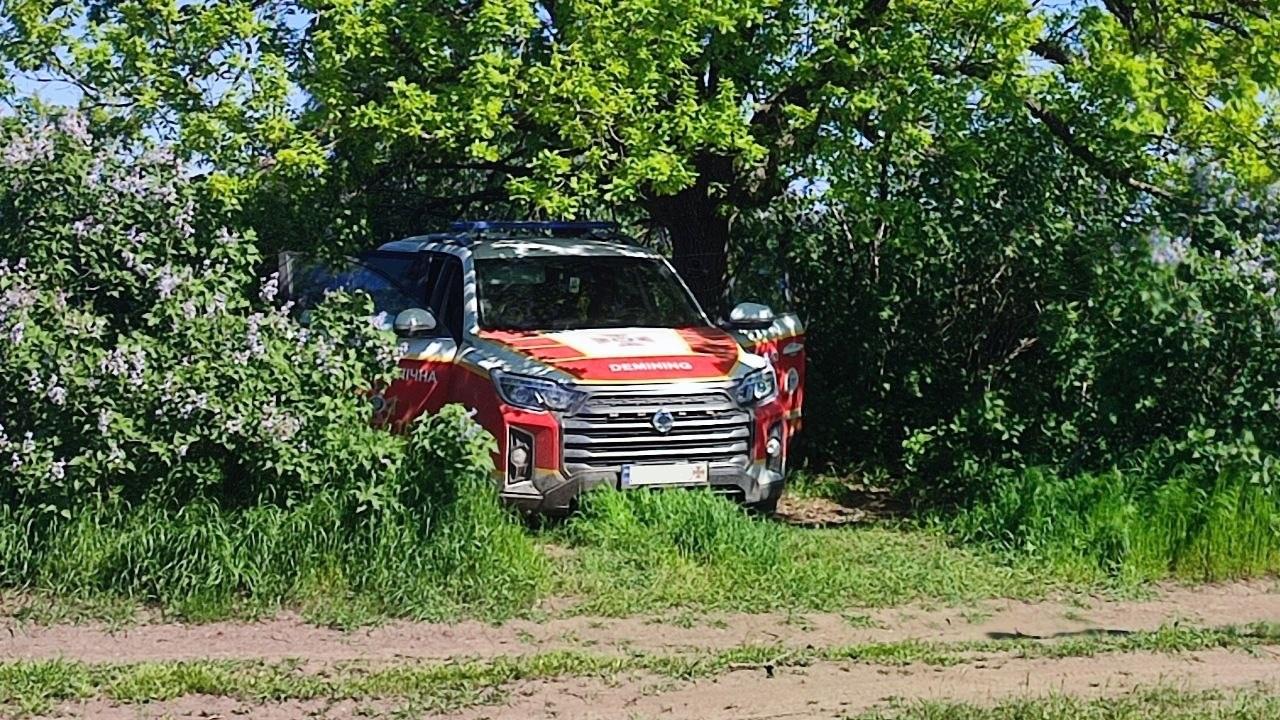
State Emergency Service workers remain desirable targets for the enemy, even though their work has nothing to do with combat. For this reason the men also choose accommodation away from towns – inconspicuous settlements, but not too far from the area where demining is under way.
“We are paid an extra 300 hryvnias a day in per diem, notionally for food and other needs. There is also a fixed sum that can be paid as compensation for renting accommodation, but there is a catch. To receive the compensation we have to provide an official receipt, and which of the locals rents out a home officially? Only hostels, perhaps, where staying would be beyond our means,” says the head of the State Emergency Service pyrotechnic unit.
Sometimes the men manage to come to an arrangement with the owners of long-abandoned houses to live there and look after the house a little. Then the rent becomes minimal. But here, too, one has to understand that these houses have stood empty for years, so the living conditions leave much to be desired.
“Once we managed to arrange to stay in a house in a village that suited us best in terms of location, but when we went into the kitchen we were stunned. Mould had completely destroyed the kitchen. For more than a week we cooked only over a fire until we bought anti-mould products so that we could at least go into the kitchen,” Denys recalls.
Despite all the difficulties, he smiles as he remembers the local residents, who always welcomed State Emergency Service workers. Denys recalls that in frontline towns Ukrainian soldiers are constant guests, so sappers and pyrotechnicians surprise no one. People often share vegetables from their gardens and treat them to something tasty.
How the occupiers try to make demining harder
The pyrotechnicians’ work on deployment can be divided into two categories: handling requests from local residents and demining territory.
First and foremost, the State Emergency Service deals with requests from civilians. Someone has found an unknown object, a munition has landed in someone’s vegetable garden or near a house, and so on. Denys says every call-out is completely different and it is never possible to predict exactly how a discovered explosive object may behave. The Russians modify explosive objects: they add extra batteries to extend the devices’ operating time, use delayed-detonation systems, add various objects to the explosive charge to increase fragmentation damage in the blast, and so on.
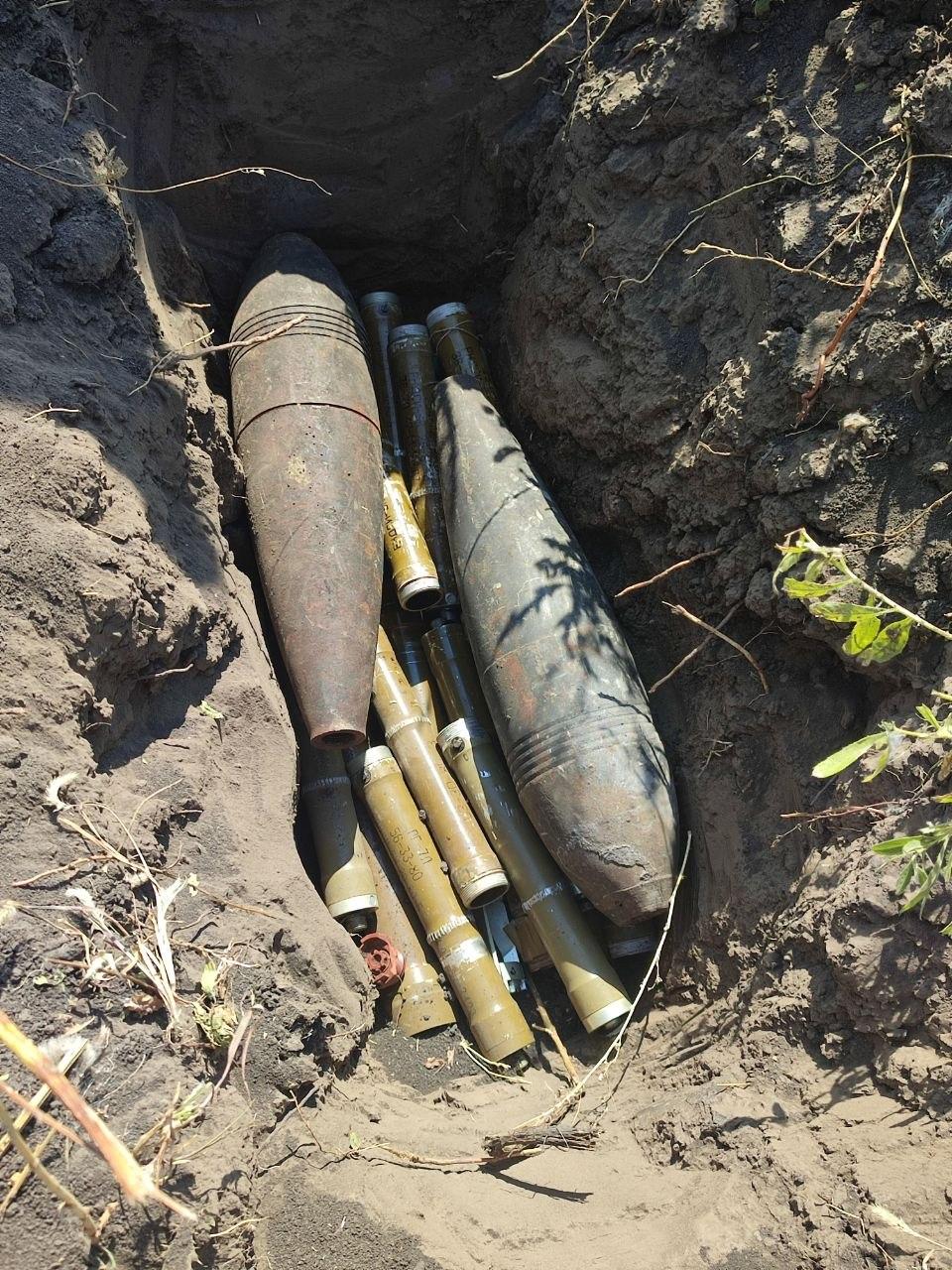
That is why pyrotechnicians always take extra precautions before removing an object.
“We have special grappling hooks that we use to catch an explosive object from a relatively safe distance. This works when an object is stuck on a roof or when it needs to be pulled out of the ground to make sure there is not another mine planted under it,” the pyrotechnician says.
The next stage is waiting. To be sure an explosive object is safe to transport, pyrotechnicians may wait anywhere from a few hours to a whole day to make sure there is no delayed-detonation mode.
Denys says the human factor is an important consideration. Under State Emergency Service instructions, explosive objects should be destroyed immediately on discovery, but when it comes to requests from people, detonating on the spot can more often than not destroy local residents’ property or homes, so pyrotechnicians prefer to wait and transport the objects to a safe distance for destruction.
“We try to help people, not to harm them. What would people say about us if we blew up someone’s house?” says the head of the State Emergency Service pyrotechnic unit.
How work in the field is different
Demining territory is a completely different kind of work. In areas where active fighting took place, the number of explosive objects found can run into dozens. Grenades, shells for various types of artillery, mines of various kinds. To comb an area, pyrotechnicians use metal detectors, mine probes and so-called fillers for detecting tripwires.
Denys says tripwires also vary; in undergrowth they may be set at different heights, so attentiveness is the main tool. A particular feature of tripwires is that they can detonate on any contact. Some types, for example, detonate even when the cord is cut, not only when it is pulled.
“If we find a grenade, there will definitely be another one nearby. Most explosive objects are found where the trenches ran. But you also have to be careful with mines. The Russians plant anti-personnel mines under anti-vehicle mines, so detonation is possible even if a person steps on one,” the pyrotechnician notes.
Separately, there are mines that react to changes in the magnetic field; they are designed primarily to destroy vehicles, but a soldier or sapper in full gear can also set one off.
The hardest part is not the mines
In six years in the State Emergency Service, Denys has learned to work with danger and to check every detail, even if the process drags on. But asked what is hardest, he gives a completely different answer:
“Tall grass, scorching sun and a lot of paperwork,” he jokes. That is what troubles most the people who, in difficult conditions, almost every day defuse devices that could have taken someone’s life.
(The names of the people in this story have been changed for security reasons.)
Yulia Derdiuk