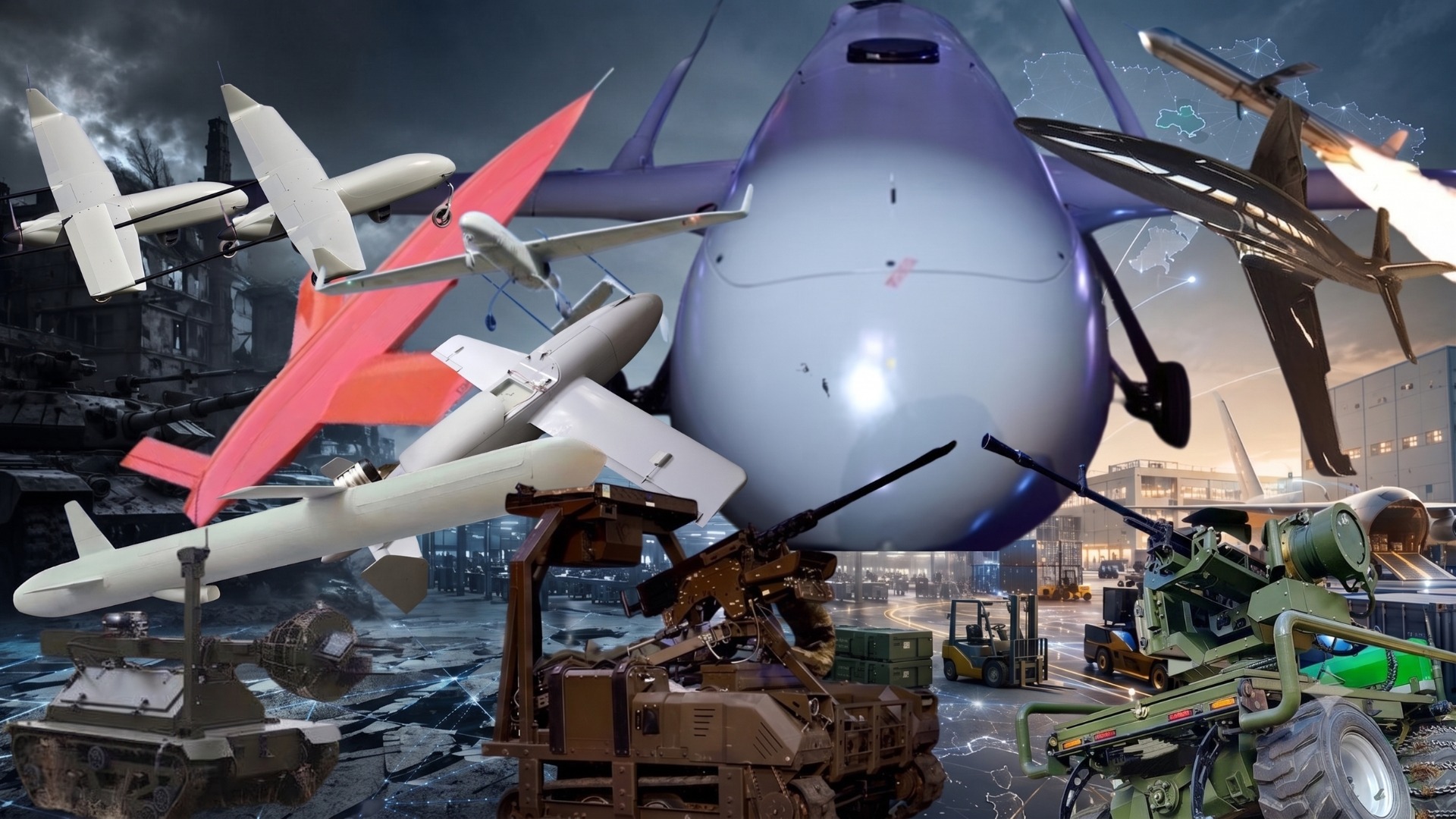

Ukraine is taking a step toward becoming a country that not only purchases weapons but also manufactures them and is ready to export them. Ukraine kicked off the first half of the year with a decision that many arms manufacturers had been awaiting. On July 1, 2026, the Cabinet of Ministers adopted a resolution that gradually opens the door to arms exports—for now, within the framework of the Drone Deals program. Naturally, this is primarily for Ukraine’s allies. This was a landmark decision not only for Ukraine’s defense-industrial complex but also for the international arms market. A number of new contracts were signed during the NATO summit in Ankara.
In brief:
- For the first time since the start of the full-scale war, Ukraine is opening the door to exporting its own weapons. The starting point was the government’s Drone Deals program, which provides for cooperation with partner countries.
- Over the years of independence, Ukraine has evolved from selling its Soviet military legacy to developing its own modern military technologies. The full-scale war with Russia has significantly accelerated this process.
- Ukrainian drones and combat experience have become a competitive advantage. Domestic production capacity already exceeds the needs of the Armed Forces, and Ukraine’s experience is attracting interest from allies.
- Arms exports represent not only profit but also Ukraine’s integration into the global defense industry. They open the door to new contracts, joint projects with NATO, and participation in European defense programs.
- Ukraine is increasingly viewed not only as a recipient of military aid but as a state capable of setting new standards for modern warfare and serving as a full-fledged player in the global arms market.
Ukraine first made a serious entry into the arms market on the eve of the fifth anniversary of its declaration of independence, in 1996. At that time, a contract was signed to supply Pakistan with 320 tanks worth $650 million. In this way, Ukraine demonstrated its significant potential as an arms exporter, as cooperation with Asian countries involves a complex negotiation process. The process of preparing and managing the contract was so dramatic that the then-head of the SBU’s counterintelligence division, Oleksandr Sharkov, was even held in a pretrial detention center. Russian agents of influence attempted to derail the tank contract, but Ukraine fulfilled it.
Cooperation with Russia was a key factor in the development of Ukraine’s defense-industrial complex during the early years of its independence. The shared Soviet legacy—whose substantial arsenals were sold to countries in Asia and Africa—the inertia of cooperation with a “brotherly nation,” and even the commitment by the security services of the CIS countries not to act against one another (a commitment the Russians constantly violated)—all of this formed the backdrop.
Ukraine found itself in a “Procrustean bed” (i.e., an attempt to forcibly fit something into certain standards—ed.) of post-Soviet dependence on Moscow’s dominance within the arms market.
From 2011 to 2015, Ukraine ranked among the top ten arms exporters according to SIPRI, selling over a billion dollars’ worth of weapons and ammunition each year. However, this fact is no cause for celebration. The process of downsizing the Armed Forces of Ukraine, which began during the presidencies of Leonid Kuchma and Viktor Yushchenko, took on a massive scale under Viktor Yanukovych. The pace and scale of Ukraine’s disarmament posed a significant threat to the country’s defense capabilities. Russia’s annexation of Crimea in 2014 halted the process of “dismantling” the Ukrainian army and gradually spurred efforts to develop indigenous military technologies.
Ukraine’s scientific and technical potential allowed it to cover—if not the entire range of weapons used by a modern army—at least enough to ensure the strategic autonomy of the domestic defense industry.
Russia’s large-scale invasion of Ukraine on February 24, 2022, changed everything. The first deliveries of heavy weapons—155-mm “NATO-caliber” howitzers—began in April. I would like to note that today, according to Ukrainian President Volodymyr Zelenskyy, Ukraine produces more of its own “Bogdan” howitzers of this common caliber than any other country in Europe. Over nearly 1,600 days of war against Russia, Ukraine has become a key importer of weapons worldwide. It accounts for about 10% of global imports of weapons and ammunition.
The active participation of private companies and competition in this market have created conditions for the rapid development of the unmanned systems industry. Ukraine’s production capacity today significantly exceeds the needs of the Ukrainian Armed Forces.
However, in today’s world, simply purchasing weapons is not a viable strategy. This creates both technological dependence and the potential for political problems in the event of a change in government in a particular exporting country. Moreover, Ukraine (frankly speaking, not out of choice but due to a shortage of artillery shells) has become a trendsetter in the production of various UAVs.
There is another key factor—the experience of using UAVs in real combat conditions, which the Ukrainians possess. Not only have they repeatedly demonstrated this experience during exercises with NATO militaries, but they have also sought to leverage it to enter the promising market of the Persian Gulf countries, where a conflict between the U.S., Israel, and Iran has been ongoing since the last day of spring 2026. Consequently, Drone Deals is a logical initiative by Ukraine, reflecting its desire to share its experience with its allies.
Opening up arms exports from Ukraine is not merely a means of raising funds for the development of the defense-industrial complex. It is a real opportunity to join forces with NATO countries in shaping new Alliance standards in this field and to secure contracts under the SAFE program, which the European Commission launched to enhance the defense capabilities of EU member states. It is an opportunity to operate according to global standards.
And, just as importantly, it demonstrates Ukraine’s resilience. It is unlikely that contracts will be signed with a country that has no future prospects.
Ukraine’s path to the global arms market is not an easy one. And the situation in that market offers no special treatment for victims of aggression by a nuclear power. Over the years of independence, Ukraine has evolved from exporting surplus Soviet military equipment to developing its own miltech technologies. And this maturation amid war is one of Ukraine’s greatest achievements today.
Author: Svitlana Mialyk