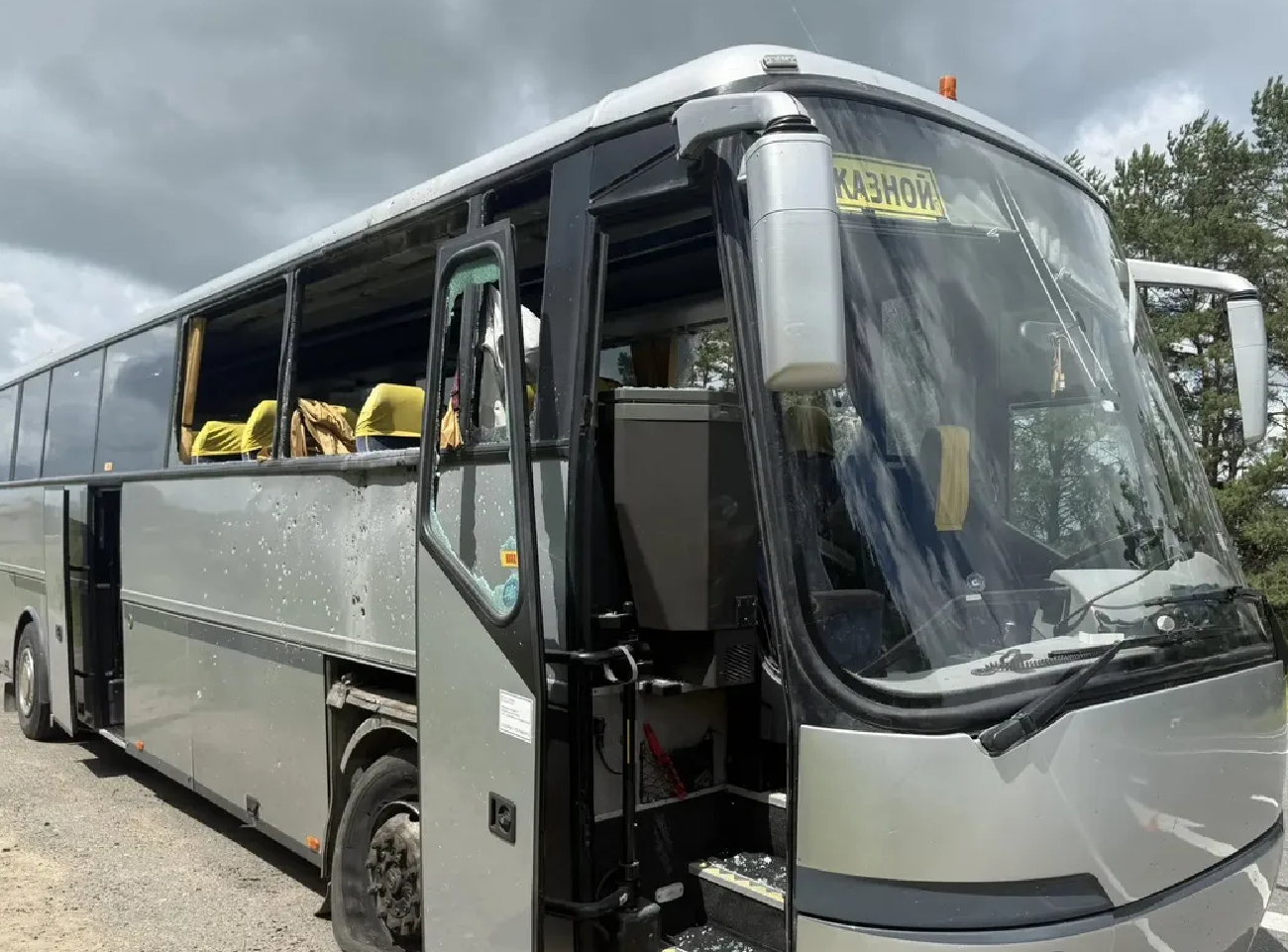

On June 17, Yegor Kovalchuk, acting governor of the Bryansk region, reported that in the Pochepsky District, a bus carrying a children’s soccer team from the Gomel region of Belarus was attacked by a “Ukrainian aircraft-type UAV.” He reported that several children were injured, one child is in critical condition, and a woman accompanying the children on the trip was killed. Then, on July 2, reports emerged of another bus from Belarus that was allegedly attacked by drones in the Bryansk region. “Black Sky” will attempt to determine whether these were indeed UAV attacks and whether these UAVs could have been Ukrainian.
IN BRIEF:
- A bus from Belarus was damaged near Bryansk
- The damage to the bus does not resemble the effects of a drone strike.
- It is possible that such damage resulted from hitting a landmine.
- It looks like a staged explosion.
- The second bus: almost intact, while a truck next to it appears to have burned up.
- Moscow wants to prevent Minsk from establishing a separate negotiation track with Kyiv.
- What a bus that was actually attacked by a drone looks like.
The first bus, allegedly attacked by a drone
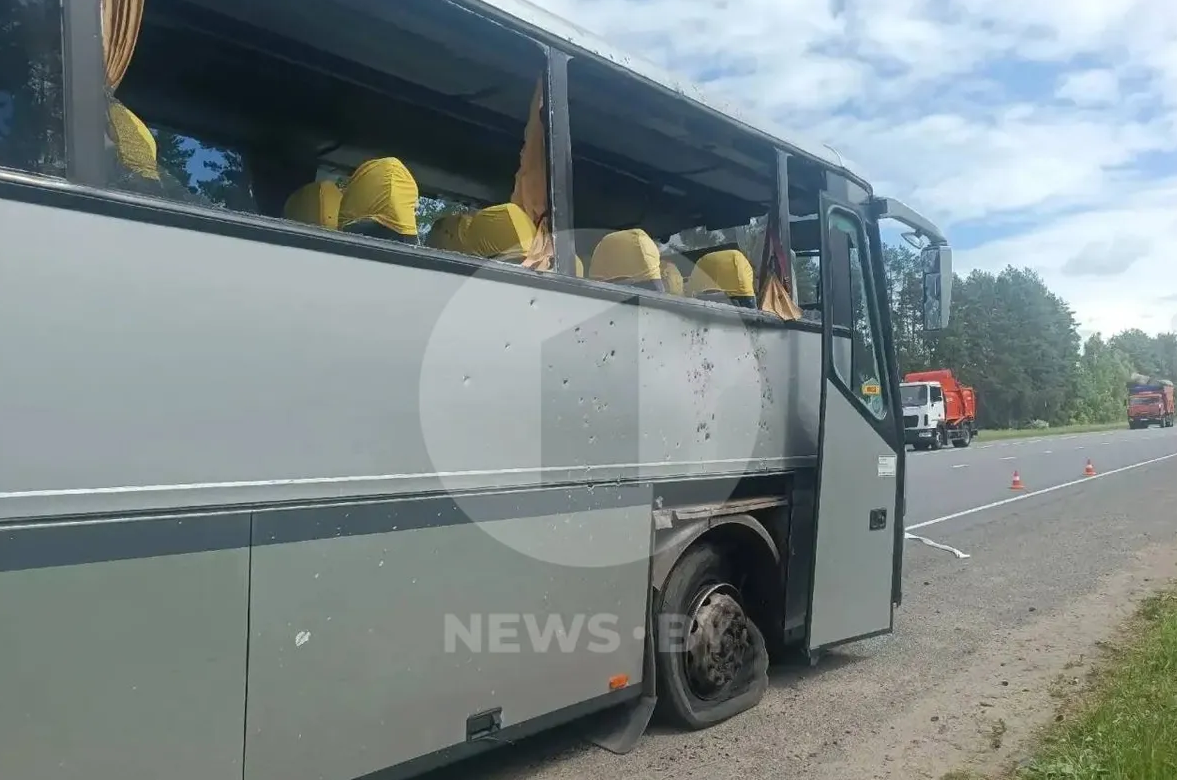
On June 17, in Russia’s Bryansk Oblast, a bus traveling from the Belarusian city of Rechitsa to Gelendzhik, Russia—located in the Krasnodar Krai on the Black Sea coast and near the new base of the Russian Black Sea Fleet—sustained damage: three windows were shattered, the bodywork was damaged, and a tire was punctured. It was reported that a woman—the wife of a youth soccer team coach—was killed, while the coach himself and, according to various sources, between 6 and 8 children were injured. One child was in critical condition.
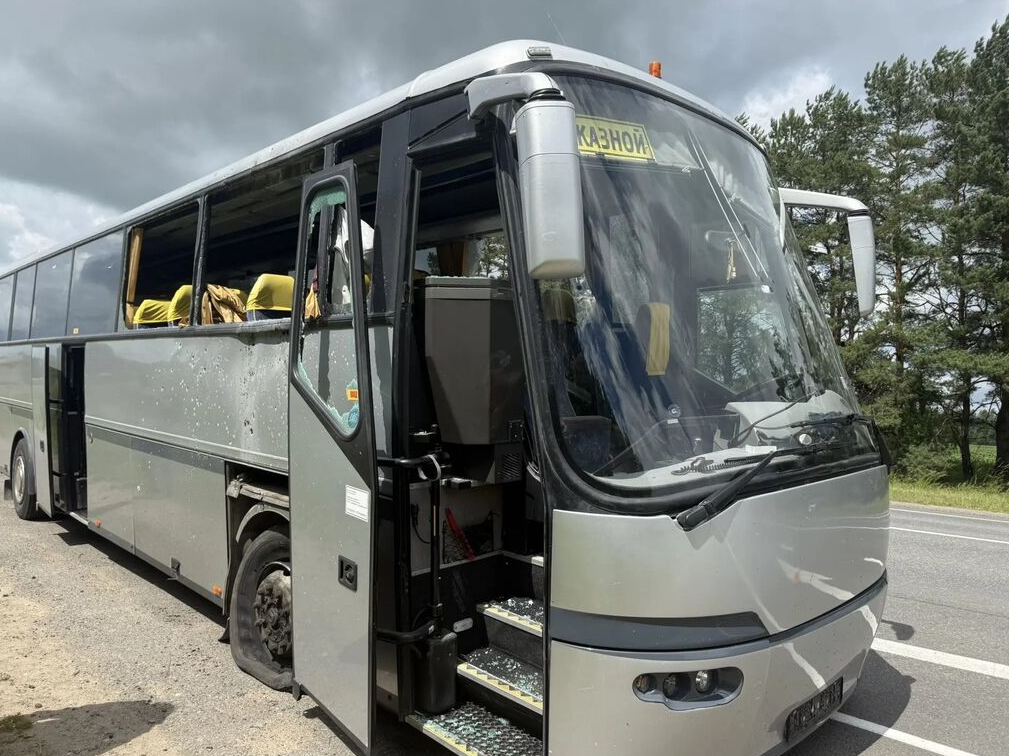
In the hours following the incident on June 17, Russian media published photos of the damaged bus. People familiar with the effects of drone strikes on vehicles were surprised that the bus, which was allegedly attacked by an aircraft-type UAV, remained virtually intact. Russia, as expected, blamed the Ukrainian Armed Forces for the attack on the bus, while Ukraine rejected any accusations, stating that it had not used UAVs in the Bryansk region that day.
Expert: In my opinion, this is a staged explosion
To understand whether this could have been a Ukrainian drone, “Black Sky” sought comment from Anatoliy Khrapchynskyi, a reserve officer of the Ukrainian Air Force, director of development at a defense company, and aviation expert.

He believes that the nature of the damage to the bus is not typical of the aftermath of a UAV attack:
“In fact, the blown-out tire and the minimal damage to the side of the bus are surprising. The debris scattered along the side of the bus indicates that the approximate payload of the weapon that struck there was between 400 grams and 1.5 kilograms. That is what could have caused such damage. Because if the payload had been larger and the strike had been a direct hit, the bus would have caught fire completely, and even the bus’s structural frames would have been damaged. What we see is a dent near the window that appeared in a strange way, and shrapnel scatter. Moreover, the windows were shattered in only three places, and no glass flew out even on the side opposite the shock wave.”
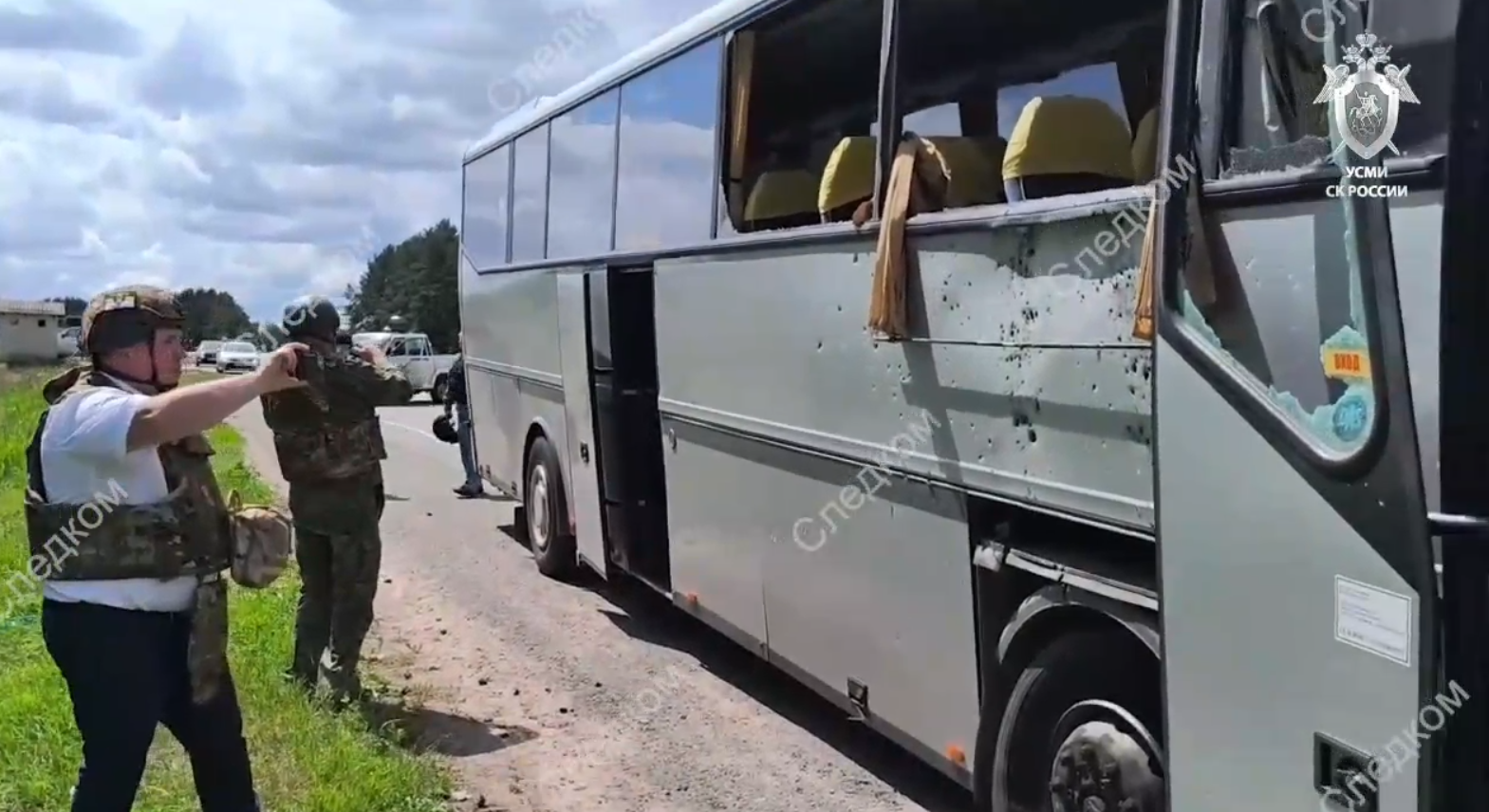
The expert believes that the damage visible on the bus is a simulation of an explosion:
“In my opinion, this is most likely a simulation of an explosion. Because if we’re talking about aircraft-type drones, that’s already an 8–10-kilogram payload. It must be noted that the damage would have been much greater. The reason Russian propaganda claims it was an aircraft-type drone is that the distance to the Ukrainian border is about 50 kilograms. It’s impossible to say it was an FPV drone—a ‘7’ or ‘9-inch’ model—because it couldn’t fly that far even with a relay. Consequently, they had to claim it was something capable of reaching that distance. A wing-shaped strike drone, for example, could theoretically make it. Wing-shaped strike drones in this class weigh 9, 10, or more kilograms. Accordingly, the consequences of explosions caused by such drones are entirely different. Again: the question is, how did such a large amount of debris blow out the tire? Because such debris doesn’t puncture a tire. Consequently, most likely, this was done deliberately to exert greater psychological pressure.”
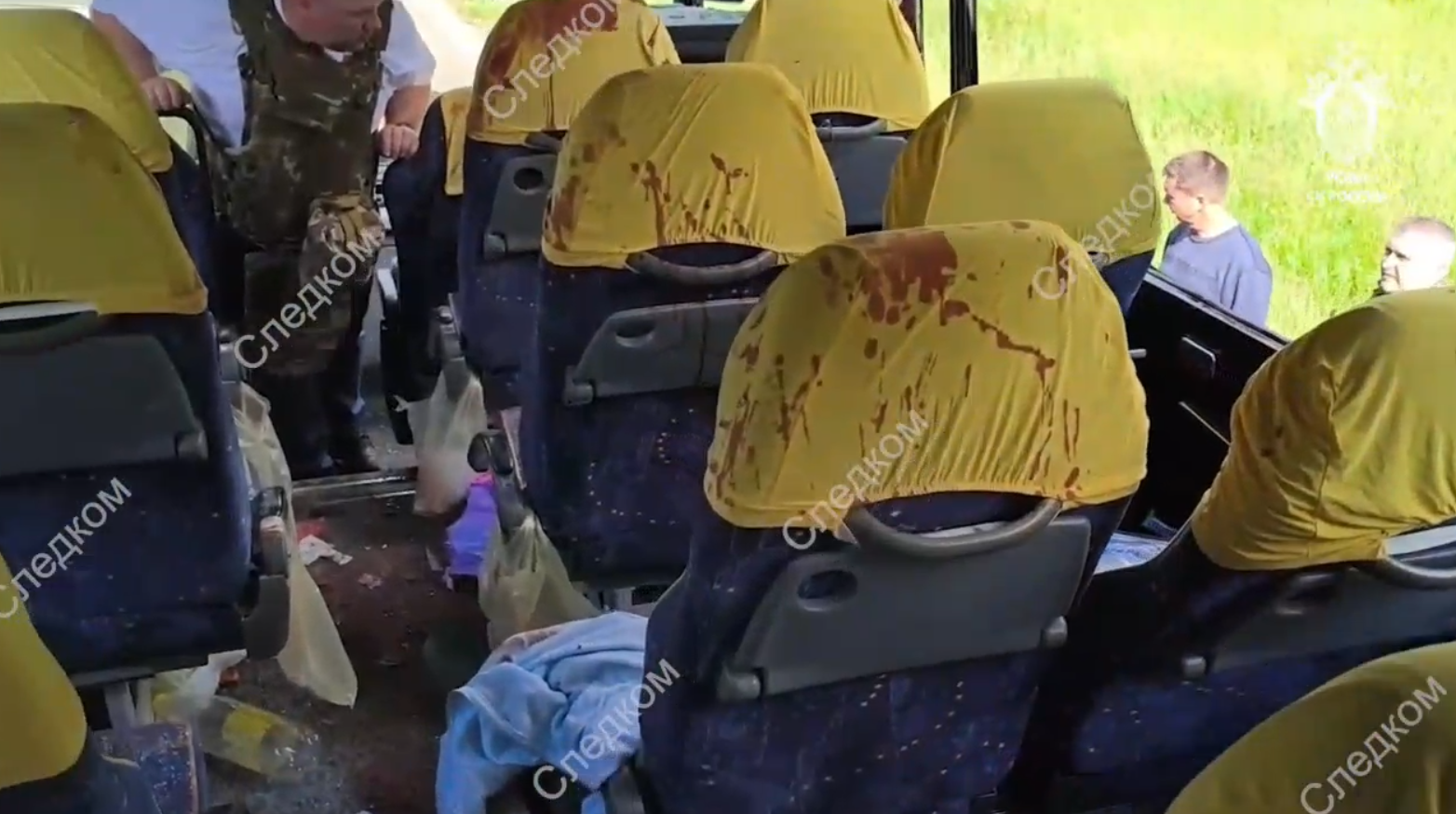
The expert explains how such damage to the bus could hypothetically have been caused:
“Purely hypothetically, here’s what they do: they position the bus, take an FPV drone—a ‘seven’ model—loaded with 1.5 kilograms of explosive, and fly it into the bus. We see the result. But at the same time, they note that it was a wing, because only a wing could travel such a distance from Ukraine.”
At the same time, Anatoliy Khrapchynskyi emphasizes that a strike by a “wing”—an aircraft-type UAV—would cause entirely different types of damage:
“Greater destructive force, greater operational range. A completely different impact mechanism. Where there’s a dent, the metal wouldn’t just be dented—it would be torn apart. The shock wave—first from the kinetic impact and then from the explosion—would simply tear the metal apart. Furthermore, the blast wave would have blown out the windshield or the window on the other side.”

In general, the expert notes many inconsistencies in the version put forward by the Russians:
“Additionally, there are no license plates on the bus. That means it’s impossible to trace the route. It’s clear that they later planted the license plates, but for some reason they’re crumpled, even though the front of the bus looks perfect. So this looks like a cheap script in an attempt to make a blockbuster.”
When asked how the tire could have been blown off, Mr. Khrapchynsky says it could have been an anti-personnel mine:
“It’s possible they ran over a ‘petal’ or some kind of mine. And that could, in principle, cause such damage. And so, if the wheel had run over it and a detonation occurred, then yes—one could say that during the explosion, the wheel would burst, the bus would tilt to the right, it would be hit by shrapnel, and the glass would shatter. But in that case, there would also be damage to the roof, and the shrapnel would have flown upward. Therefore, I am certain that this is a staged incident intended to make it look like a direct hit.”
The expert believes that the goal of such an incident could be an attempt to further drag Belarus into the war, but one cannot rule out the possibility that the Belarusian special services are trying to find an opportunity to explain why Belarus is assisting the Russian Federation.
Belarus named the drone model at the UN. But could it have been that one?
On June 29, at Belarus’s initiative, a UN Security Council meeting was convened on the topic of an alleged Ukrainian attack on a Belarusian bus carrying children. Belarusian representative Valentin Rybakov named the model of the drone that supposedly attacked the bus. According to him, it was a Darts UAV carrying a 1.2 kg warhead—in TNT equivalent. Rybakov also stated that Belarus has confirmation that the drone originated in Ukraine.
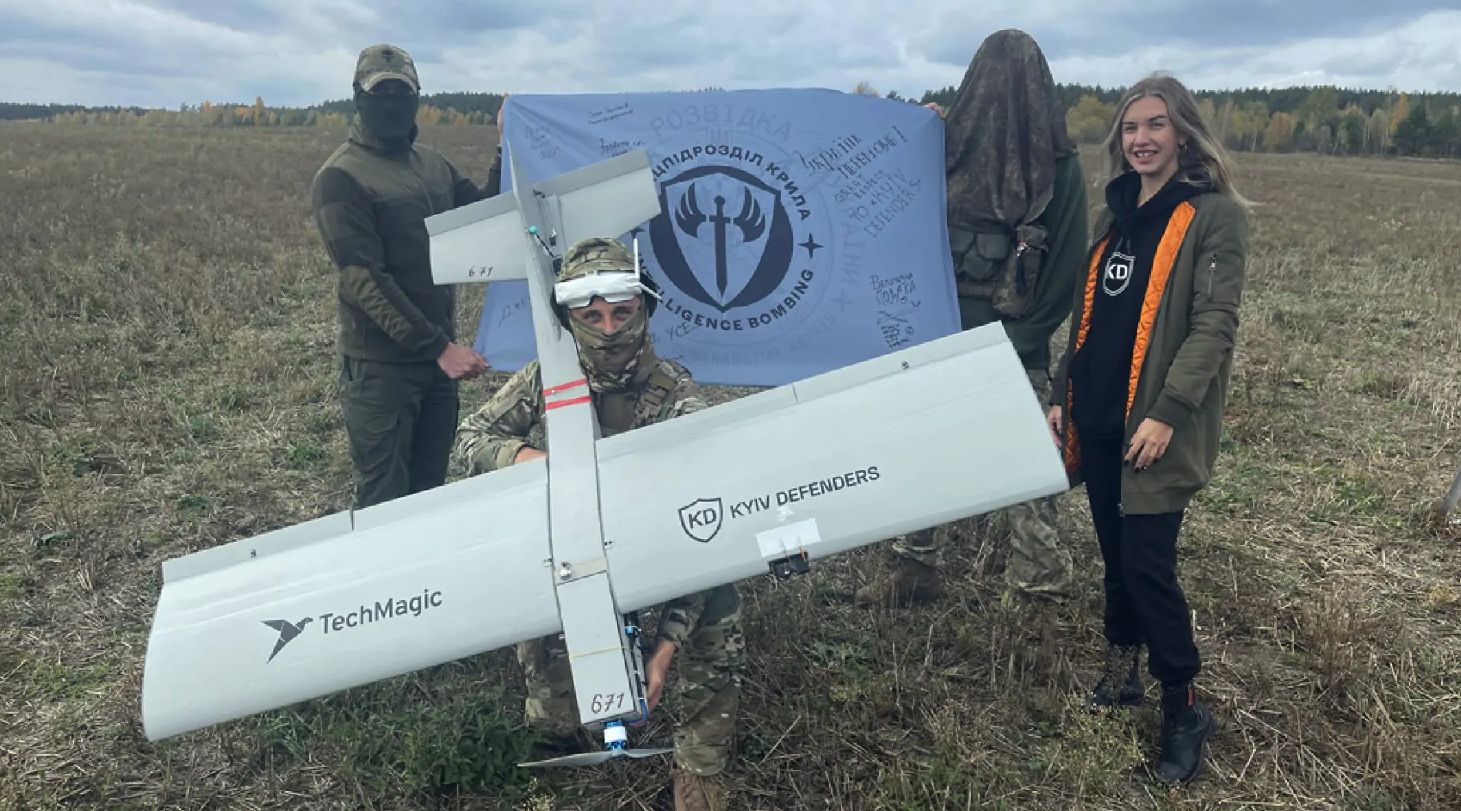
Here is what Anatoliy Khrapchynskyi has to say about these statements:
“Debris from these Darts drones can be found even in the temporarily occupied territory, and it’s not difficult to obtain drone debris and plant it at the scene of the incident. But a Darts-type UAV carries between 5 and 8 kilograms, whereas the blast there was no more than 1.5 kilograms. And again, let’s not forget that among all the photos from the scene of this incident, there wasn’t a single photograph of drone debris. In other words, they couldn’t even provide this debris in time for the photo.”
The second bus: almost completely intact

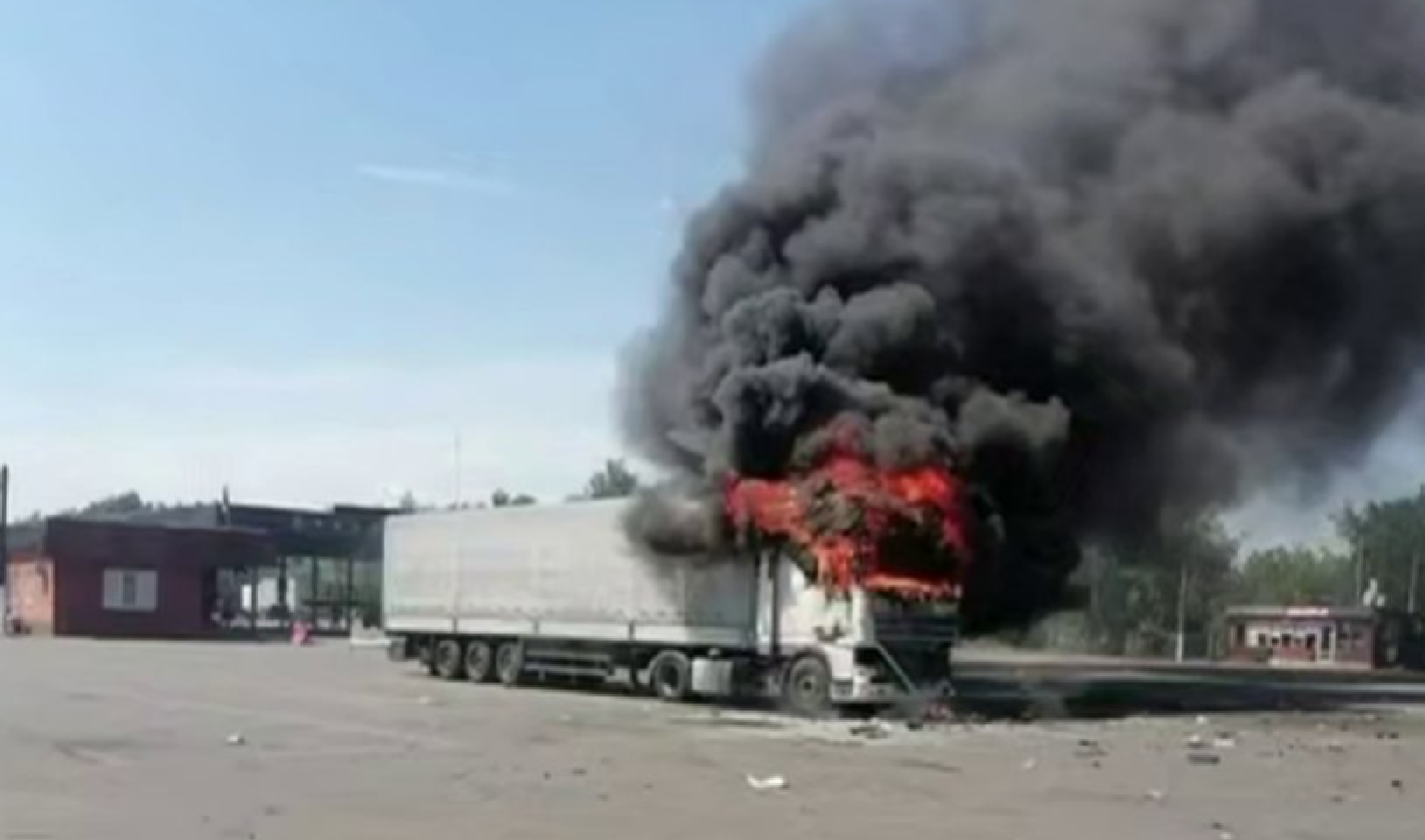
But June 17 wasn’t the only incident involving a Belarusian bus. On July 2, another bus carrying tourists from Minsk to Anapa—also in Russia’s Krasnodar Krai—was allegedly attacked by a drone right at the “Krasny Kamen” border crossing between Belarus and Russia. However, in this case, the damage was even minor—the bus is missing two windows and has a very neat hole in the front door. Two drivers and one passenger were injured.

Shortly after acting Bryansk Oblast Governor Yegor Kovalchuk claimed that a Ukrainian drone had once again attacked a bus carrying civilians, a video emerged from the scene showing three trucks parked next to the bus, the middle one of which later appears to be on fire as if from a drone strike.
It appears to be an attempt to set a precedent so that Belarus can raise the stakes in its dialogue with Ukraine
Belarusian political analyst and co-founder of the analytical network “Research Solutions” (Ukraine) Igor Tishkevich believes that these incidents involving buses are part of a broader process:

“Ukraine has recently been deliberately raising the stakes to create a sort of parallel track to its direct negotiations with Belarus. At the same time, Moscow understood very well that the existence of various separate negotiation tracks between Minsk and other parties significantly expands Lukashenko’s room for maneuver. Therefore, these attacks on the bus—as they were spun by Moscow, which immediately blamed Ukraine—appear to be an attempt to set a precedent so that Belarus, too, could raise the stakes in its dialogue with Ukraine and react very sharply. Such a move is disadvantageous for the official Minsk. For Kyiv as well. Minsk decided to respond quite mildly. Especially since, by all accounts, the Ukrainian envoys were indeed with Lukashenko.”
Igor Tishkevich believes that the two cases of buses allegedly attacked by drones should be treated separately.
“It’s one thing when a single bus is traveling on the highway and is supposedly hit by a drone, and it’s another thing when a drone attacks a truck that might be carrying military cargo, and the bus is struck by debris from that truck. Both scenarios could very likely be provocations staged by the Russian Federation for political purposes. But in the second case, it could also have been a Ukrainian operation targeting a truck that, according to intelligence reports, was transporting some kind of military equipment. However, these are just my assumptions based on what I see in the photographs.”
At the same time, Tishkevich points out that Russia is pursuing a deliberate policy of luring Belarusians to Russian resorts so that they travel on roads near combat zones, with the aim of eventually creating an incident in which people will die—and it will become clear, without any propaganda, that this is due to shelling from Ukraine.
“They fear this in Minsk. They’re worried in Kyiv, too. That’s exactly why Volfovich (Secretary of the Belarusian Security Council Alexander Volfovich – ed.) issued a statement saying it’s better not to travel to Russia.”
What the drone-struck bus actually looks like
On July 8, an incident involving a bus occurred in Ukraine on the highway from Rostov-on-Don, Russia, toward Crimea, near Melitopol, which is temporarily occupied by Russia. This was reported by Yevgen Balytskyi, the “governor of Zaporizhzhia Oblast” appointed by the occupiers.

The so-called “land corridor” to Crimea has long been dangerous—Ukraine is trying to disrupt Russian logistics there to prevent supplies from reaching the occupying forces. Therefore, Ukraine has brought this entire route under full fire control. The Russian command has already banned military vehicles from traveling along this route, redirecting them onto rural roads along the coast of the Sea of Azov. At the same time, the Russians have not stopped civilian traffic on this route, using it as a human shield for military transport, even though this route is a combat zone.
What is striking about the July 8 incident is that, according to Balytskyi’s report, all 11 civilians—2 drivers and 9 passengers—managed to leave the bus after the drone strike, and no one was even injured. However, none of the passengers have been shown anywhere. Ukrainian officials have not commented on this precision strike. However, experts believe that the bus was transporting either personnel to reinforce the troops or some kind of military supplies. If Russian soldiers were on the bus, they were killed in the strike, but showing the bodies of soldiers would contradict propaganda objectives.
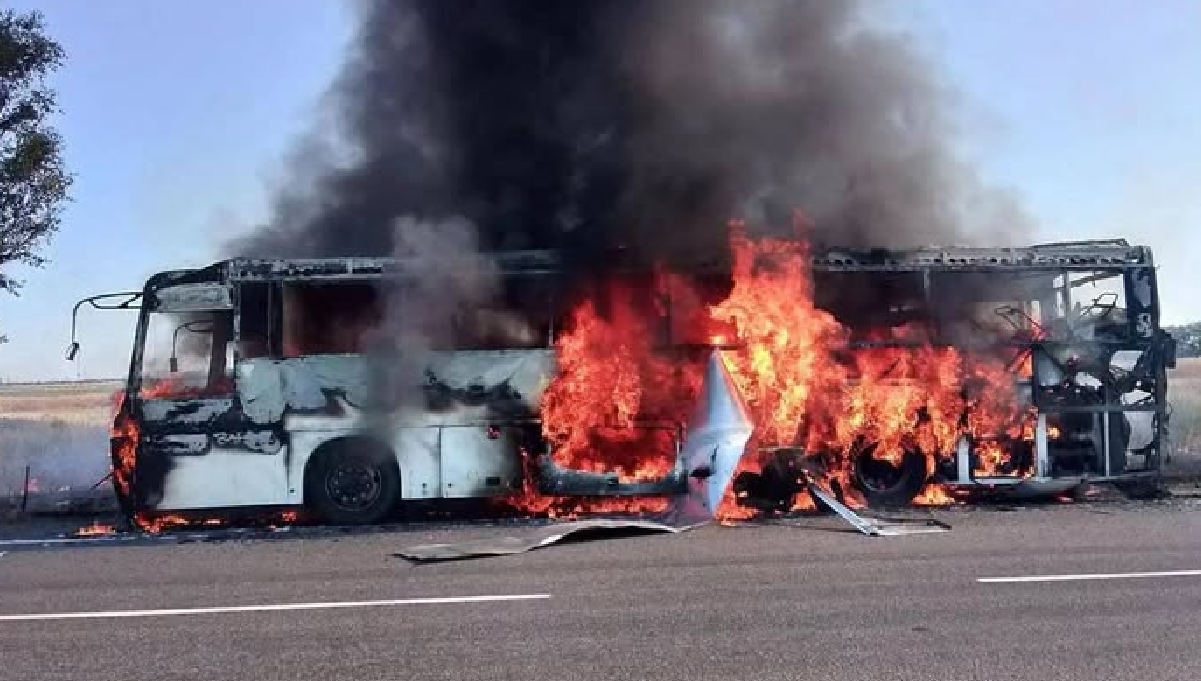
But here it is interesting to compare what a bus that was actually hit by a drone looks like. Even a visual comparison with the condition of buses from Belarus—which, according to Russian claims, were damaged by Ukrainian drones in Russia’s Bryansk Oblast—shows that this bears no resemblance whatsoever to the condition of a bus that was actually struck by a drone.
Andrus Hajovy
Official Russian and Belarusian sources cited in this text are for informational purposes only. Content from these sources may constitute disinformation or propaganda.