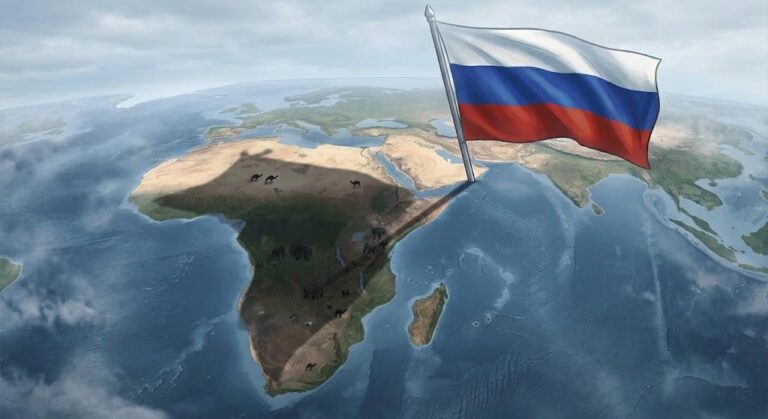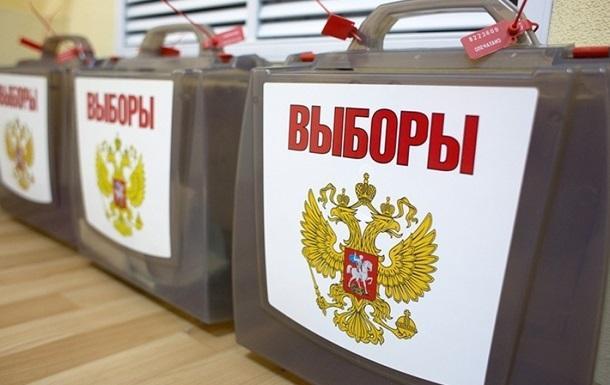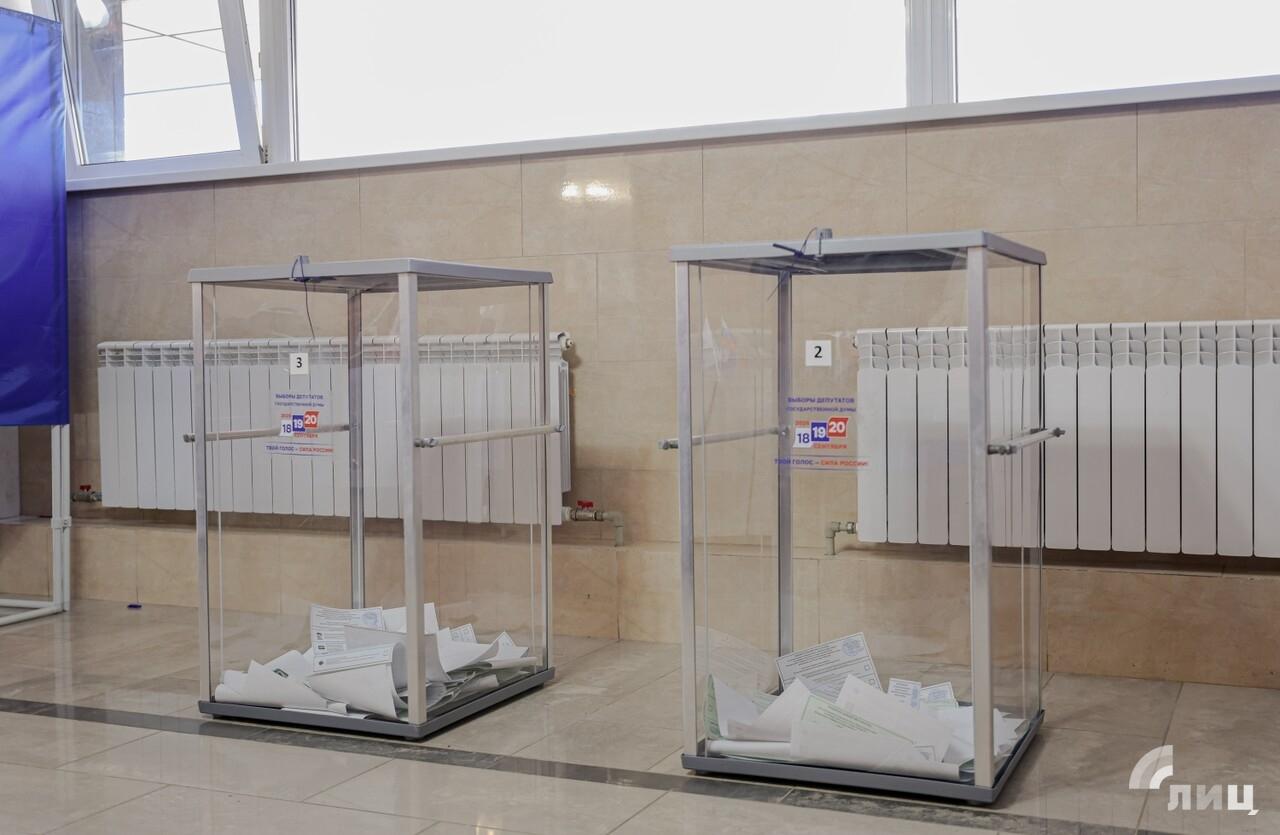

For the first time Russia is electing State Duma deputies from the occupied territories of Ukraine. The vote is being held under martial law and amid continuing fighting, so a large share of voters cast their ballots early.
Ukraine and international organisations consider Russian elections on the occupied territories unlawful and say such a vote violates Ukraine’s sovereignty and territorial integrity. Moscow, by contrast, continues to build these regions into its own political system.
In brief:
- According to the Central Election Commission, some 3.6 million voters holding Russian passports are registered in the Donetsk, Luhansk, Zaporizhzhia and Kherson regions
- Seven single-member constituencies have been created there; residents are voting for the federal party lists at the same time.
- The number of candidates per seat is noticeably lower there than in Russia as a whole
- United Russia is paying particular attention to these territories, and other parties are represented too. Only Yabloko put forward no candidates in the occupied territories
- A special voting procedure applies in this region, and voting itself began several weeks ago
- Members of election commissions have already been killed, most of them in the Zaporizhzhia region
- The OSCE: the results of the vote will have no validity under international law
- Political scientist Yevhen Mahda: personal EU sanctions against every deputy of the new State Duma would be an adequate response to Russia’s imitation of elections
For the first time with constituencies of their own
This is not the first time Russia has held elections on the occupied territories of Ukraine. Residents of the Russian-controlled parts of the Donetsk and Luhansk regions who received Russian passports took part as far back as the 2021 Duma elections: trips to the Rostov region were organised for in-person voting, and remote electronic voting was also available. After Russia declared the annexation of the Donetsk, Luhansk, Zaporizhzhia and Kherson regions in 2022, regional elections were held on the territories it controls in 2023, and presidential elections in 2024.
The 2026 parliamentary elections, however, are the first in which the occupied parts of the Donetsk, Luhansk, Zaporizhzhia and Kherson regions have been folded into the Duma campaign as Russian regions with single-member constituencies of their own. According to Central Election Commission data from the start of the year, some 3.6 million voters with Russian passports and registration in these territories are on the rolls in the four regions.
Seven single-member constituencies have been created in all: three in the Donetsk region, two in Luhansk and one each in the Zaporizhzhia and Kherson regions. Residents are voting for the federal party lists at the same time.
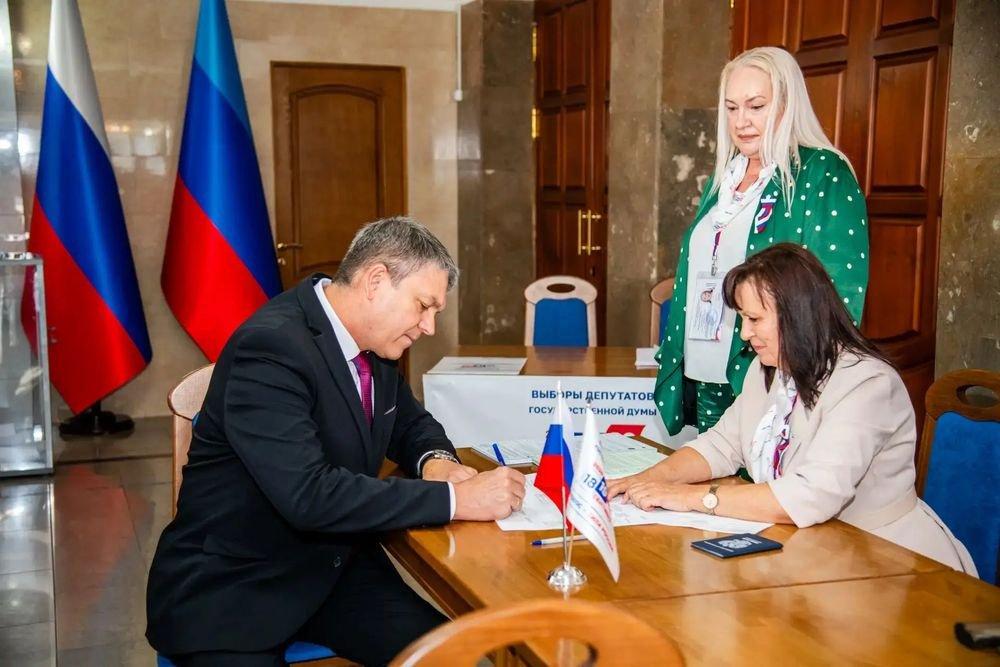
Under international law these territories remain part of Ukraine. Kyiv considers Russian elections there unlawful. In August Ukraine’s foreign ministry said that folding the occupied territories into the Russian electoral system violates the country’s sovereignty and territorial integrity, and that the results of such a vote will have no legal force for Ukraine.
International organisations also condemned the holding of elections on the occupied territories. ODIHR and the OSCE Parliamentary Assembly issued a statement to that effect back in early August. In their assessment, holding Russian elections on the internationally recognised territory of Ukraine violates its sovereignty and territorial integrity, and the results of such a vote will have no validity under international law. Separately, OSCE representatives criticised Russia for not inviting the organisation’s observers to the Duma elections.
Yevhen Mahda, director of the Institute of World Policy, believes the international response to Russia holding elections on the occupied territories could have been tougher:
“What we need is not only suspicions and criminal cases against electoral collaborators, but targeted and exemplary punishment capable of demonstrating Ukraine’s strength as a state. Personal EU sanctions against every deputy of the new State Duma would be an adequate response to Russia’s imitation of elections.”
From curators to deputies
Before these elections there were no State Duma deputies of their own elected from the occupied territories: the current composition of the lower house was formed back in 2021, before Russia declared the annexation of the four Ukrainian regions.
After 2022, work with these territories was assigned to sitting deputies. The State Duma attached Viktor Vodolatsky to the LPR, Dmitry Sablin to the DPR, Andrei Krasov to the Zaporizhzhia region and Gleb Khor to Kherson. They were to handle residents’ appeals and set up deputies’ offices. These territories will get single-mandate deputies of their own for the first time as a result of the 2026 elections.
In the upper house of the Russian parliament, the Federation Council, these regions are already represented. After the annexation declared by Russia they received two seats each.
Yevhen Mahda believes that holding Duma elections on the occupied territories should be seen as a continuation of Moscow’s attempts to lock these regions into the Russian political system. The process of integrating them he calls largely formal.
“Collaborators and opportunists cannot by any means always use the social lifts inside the Russian system of power; they are rather expendable material and extras. The Kremlin is trying to demonstrate to the whole world that one fifth of Ukraine’s territory is Russian for good, and that is in fact a dangerous signal that demands a response from the international community.”
The candidates of occupation
Formally the elections on the occupied territories are being held on a multi-party basis, but the number of contenders there is noticeably lower than in many Russian constituencies. The single-member constituencies in the Zaporizhzhia and Kherson regions turned out to be among the least competitive in the State Duma elections: just four candidates are running for each seat. By comparison, the country-wide average is around seven candidates per single-member seat, and in the most competitive Karelian and Angarsk constituencies there are 11.
United Russia is paying particular attention to these territories. The party merged the four regions into one large regional group of its federal list, comprising 20 candidates. It is headed by the sitting State Duma deputy Viktor Vodolatsky. Behind him the list consists mostly of federal figures: the former human rights commissioner Tatyana Moskalkova, State Duma deputy Vyacheslav Nikonov and the first deputy commander-in-chief of the navy Vladimir Kasatonov. The first representative of the occupied territories themselves in the top five is Yan Leshchenko, a deputy of the LPR parliament created by Russia.
In the single-member constituencies United Russia placed more emphasis on candidates tied to these territories or to the war. In the Donetsk region the party is running the sitting State Duma deputy and former “prime minister of the DPR” Alexander Boroday, Channel One war correspondent Irina Kuksenkova and Sergey Makarov, deputy technical director of the Impex-Don coal holding. In the Luhansk region it is running Denis Kolesnikov, deputy speaker of the LPR People’s Council, and Ivan Sanayev, chair of its social policy committee. In the Zaporizhzhia region United Russia is running Alexey Tikhomirov, a deputy of the Crimean parliament, and in Kherson Elena Dmitruk, first deputy chair of the regional duma created by Russia.
Yabloko, which built its Duma campaign around an anti-war position, put forward no candidates in the seven single-member constituencies on the occupied territories. The party’s federal list, it should be recalled, was struck from the ballot by a Supreme Court ruling.
“What looks telling to me is the fact that a good third of the candidates for the Duma are military men (‚veterans’). It means the Kremlin plans to transfer to the State Duma part of the job of stoking tension and deploying bellicose rhetoric,” the political scientist Yevhen Mahda notes, commenting on the line-up of candidates.
A special voting regime
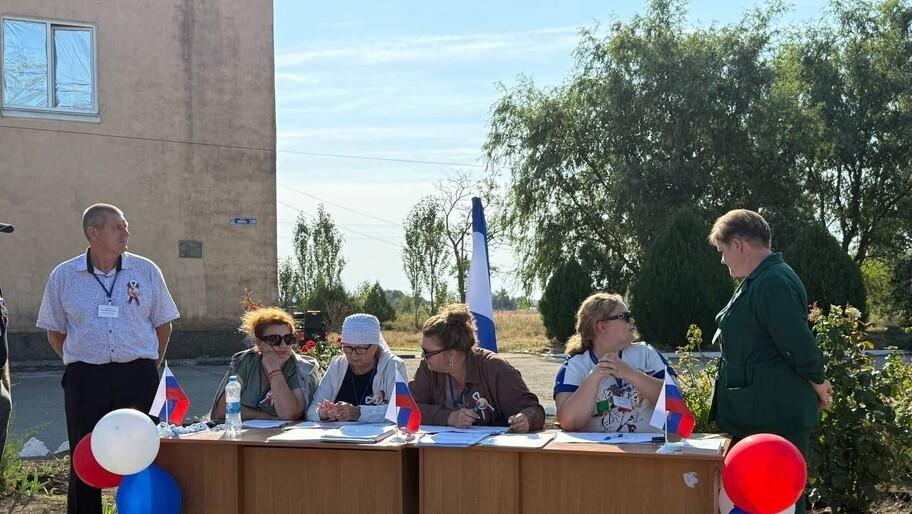
Holding elections on these territories under the usual rules is impossible if only because martial law is in force in all four regions. The Central Election Commission therefore approved a special voting procedure for them. It allows early and mobile voting, changes to how commissions operate, and restrictions on photography and filming. If a security threat arises, voting can be suspended and ballots and other electoral documentation moved to a safe place.
Voting on the occupied territories in effect began several weeks before the main polling days. By the middle of the first main day of voting, overall turnout exceeded 74% in the DPR, stood at around 47% in the Kherson region, around 41% in Zaporizhzhia and around 28% in the LPR.
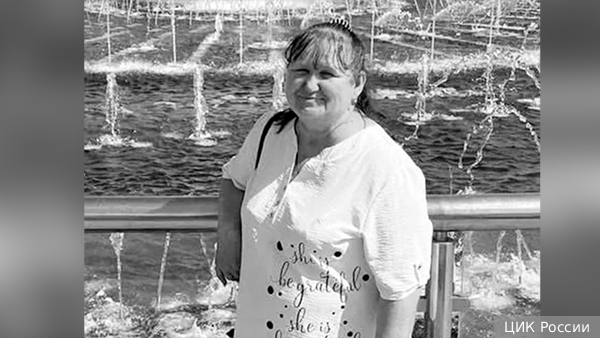
Voting is taking place amid constant security threats: in the Donetsk, Luhansk and Zaporizhzhia regions mobile commissions have had to suspend work because of drone attacks and shelling. A large share of voters are casting ballots away from fixed polling stations, with commissions going round houses and yards. There are also deaths among election commission members: according to the head of the Central Election Commission, Ella Pamfilova, most such cases have been recorded in the Zaporizhzhia region.
Authors: Volha Siamashko, Artur Zak
Official Russian and Belarusian sources cited in this text are for informational purposes only. Content from these sources may constitute disinformation or propaganda.