
Putin responded to Ukraine’s calls for an Easter ceasefire by setting clear limits on the “silence regime” that Russia is prepared to observe—32 hours. Zelenskyy agreed to the proposal and promised to reciprocate. However, Russia hints that a long-term ceasefire is not to be expected.
In brief:
- Europe is asking Ukraine to stop attacks on Russian energy infrastructure.
- Zelenskyy is ready to support the ceasefire proposal if Russia also stops shelling.
- Ukraine is betting on striking Russian energy infrastructure to destabilize the Russian economy.
- Putin has declared his readiness to introduce a “silence regime” for Easter.
- In Russia, a long-term ceasefire is considered unlikely.
Who is implementing the “silence regime”?
In late March, Ukrainian President Volodymyr Zelenskyy reported receiving “signals” from European partners regarding the need to halt Ukrainian attacks on Russian energy infrastructure.
“We are not just striking at Russia. We are responding. After the global energy crisis began, we received signals from some partners regarding reducing our responses targeting Russia’s oil and energy sectors,” – said Zelenskyy.
At that time, the Ukrainian president repeatedly emphasized the Ukrainians’ readiness for a ceasefire in response to Russia’s actions. However, he denied the possibility of a unilateral ceasefire on Ukraine’s part:
“We are using our weapons. We are defending ourselves. If we don’t hit them (Russia) in the face, they will hit us; they won’t even take us into account, they won’t feel what war is. That is why we must respond. We are responding. We will do everything in kind.”
Calls for an Easter truce from Ukraine went unanswered, while Russia continued to strike Ukrainian energy infrastructure.
On April 1, Russian drones attacked critical infrastructure facilities in the Ivano-Frankivsk region. On April 6, Russia struck an energy infrastructure facility in the Novhorod-Siverskyi district of the Chernihiv region. On April 8, an energy facility in the Odesa region was damaged.
Andriy Klymenko, head of the monitoring group at the Black Sea Strategic Studies Institute and editor-in-chief of BlackSeaNews, explained to “Black Sky” why the energy sector has become the primary target of Russian attacks:
“We are now in a ‘war of attrition,’ and it has two sides: economic resilience and social resilience. This is an economic war that is increasingly unfolding right now. Since 2024, the Russian Federation has effectively destroyed all power plants on Ukrainian territory. Ukraine held out, using various means, but we survived the winter. But there is a difference between us, and it lies in the fact that the Russian Federation finances the war and its social sector on its own, while we in Ukraine finance the war with our own funds and the social sector—with the help of our European partners—and the war, in part, as well”.
Why has Ukraine focused on Russian energy infrastructure?
On April 9, at a congress of local authorities, the head of the Office of the President of Ukraine, Kirill Budanov, spoke about the increase in Ukrainian attacks on Russia’s energy infrastructure. The Head of the Office of the President of Ukraine states that strikes on Russian oil refineries, key export ports, and terminals have significantly reduced the aggressor country’s export volumes. Ukraine is taking a comprehensive approach, forcing the enemy to stretch its air defense systems across the entire defense line, and is finding gaps in this defense while constantly increasing the range of its attacks.
The head of the monitoring group, Andriy Klymenko, asserts that Ukrainian attacks on Russian energy infrastructure are aimed at both economic factors—to weaken Russia’s financial capacity—and social factors, as the range of Ukrainian attacks is increasing, meaning the war is reaching even those corners of Russia where people had only heard about it:
“Before our very eyes, a front in the economic war is unfolding, where Ukraine is trying to reduce Russia’s ability to finance the war on their side. Right now, on the front lines of the Ukrainian-Russian conflict, attacks on Russian oil refineries, pipelines, and port terminals are coming to the forefront. This is because they account for no less than half of Russia’s export revenues. This reduces their overall financial capacity. Yes, they will find money for the war, they will find money for military spending, but they will have less money overall, and for social needs in particular.”
How long could the ceasefire last?
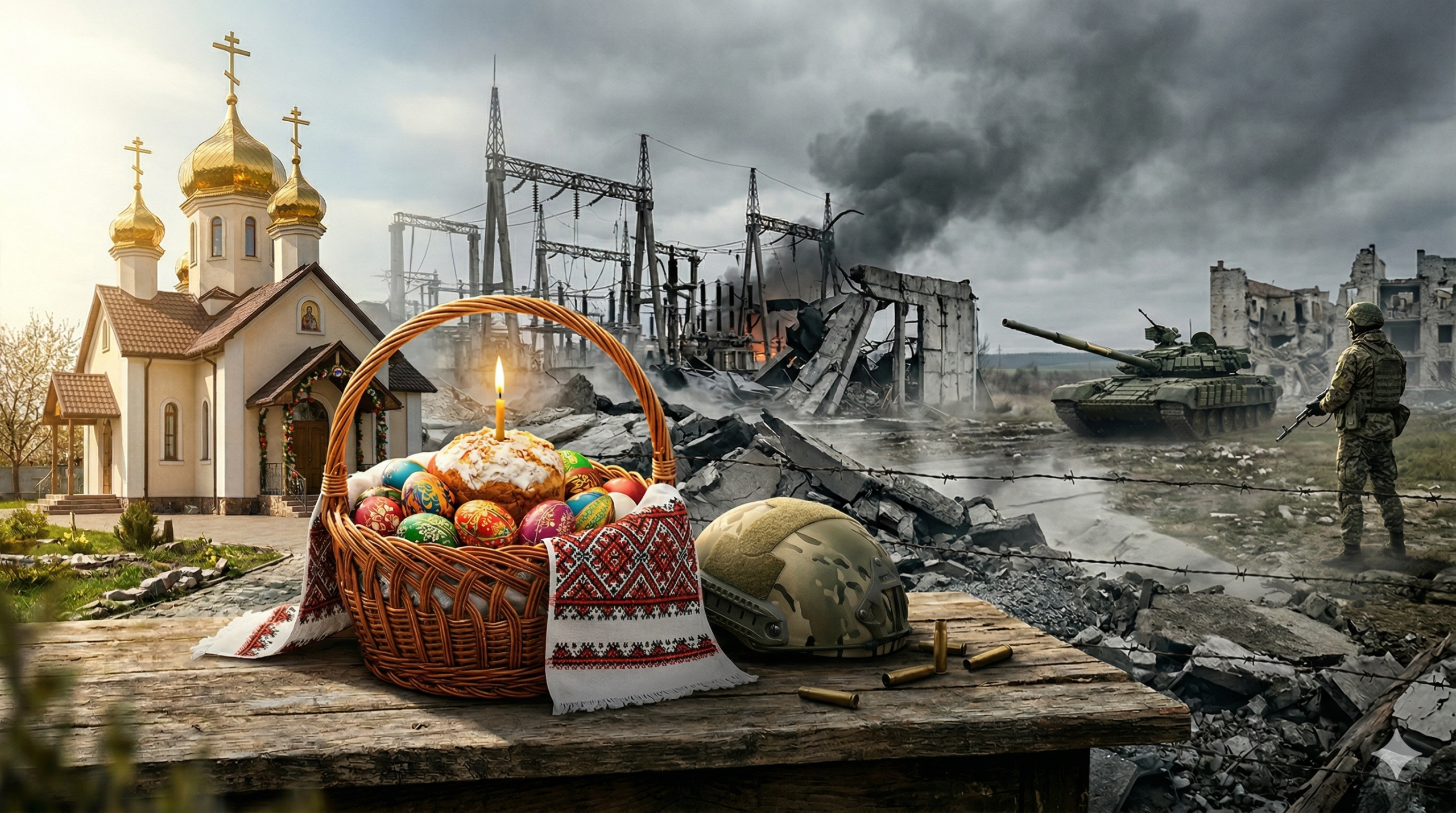
On April 9, Kremlin leader Vladimir Putin made a statement announcing a temporary ceasefire for the Easter holidays. Russia plans to implement a “ceasefire” on all fronts on Saturday, April 11, starting at 4:00 p.m. local time, and continuing until the end of Easter Sunday, April 12. In total—32 hours.
In Ukraine, the Russian president’s proposal was supported, though doubts were expressed regarding the sincerity of these statements.
According to Ukrainian Foreign Minister Andrii Sybiha, the key issue is not declarations but concrete actions: “We’ll see when and where the ceasefire takes effect, and we’ll respond in kind,” reports “BBC Ukraine.”
At the same time, Russian media have begun promoting the idea of a long-term ceasefire and accusing the Ukrainian side of making it impossible.
For instance, State Duma Defense Committee member Andrey Kolesnikclaims that a short-term truce could turn into a longer one, but directly expresses suspicions toward Ukraine regarding future attempts to violate the terms of the truce. Meanwhile, military expert and retired colonel Anatoliy Matviychuk says that a further ceasefire is impossible due to the “inability to reach an agreement with Kyiv.”
Such statements suggest that the Kremlin is not ready to consider options for extending the ceasefire and may be looking for reasons to end it prematurely.
Yulia Derdyuk
Official Russian and Belarusian sources cited in this text are for informational purposes only. Content from these sources may constitute disinformation or propaganda.