The European Union has restricted Hungary’s access to confidential negotiations and classified information. The Washington Post reported that Hungarian Foreign Minister Péter Szijjártó may have been briefing his Russian counterpart, Sergey Lavrov, on the progress of negotiations between EU member states over the past few years, using breaks in meetings to do so.
At the same time, Hungary actively opposes any EU efforts to support Ukraine, blocking relevant decisions. But in a few weeks, parliamentary elections will take place in Hungary itself, which will determine which government will lead the country. Why is incumbent Prime Minister Viktor Orbán building his election campaign on anti-Ukrainian and pro-Russian narratives?
IN BRIEF:
Since the start of the full-scale war, Orbán has visited Putin twice, while Szijjártó has visited 16 times.
The European Union no longer trusts Hungary.
The Kremlin will attempt to interfere in the Hungarian elections.
Orbán skillfully maneuvers between Putin and Trump.
The uproar over the “Druzhba” oil pipeline destroyed by a Russian missile strike is a casus belli agreed upon with Russia.
Hungary is the only EU country that remains in constant contact with Russia
While most EU countries have adhered to a policy of diplomatic isolation of the Russian Federation since the start of Russia’s military aggression against Ukraine, Hungary’s leadership maintains constant diplomatic ties with the aggressor country. Viktor Orbán has visited Moscow twice during the full-scale war and intended to go there this March.
In July 2024, he flew to Vladimir Putin on a so-called “peace mission,” which was supposedly intended to persuade the Russian leader to end the war. That visit yielded no results regarding the war. Orbán’s next trip to Moscow took place in November 2025, ostensibly to discuss Hungary’s energy security and, once again, efforts to end the war.
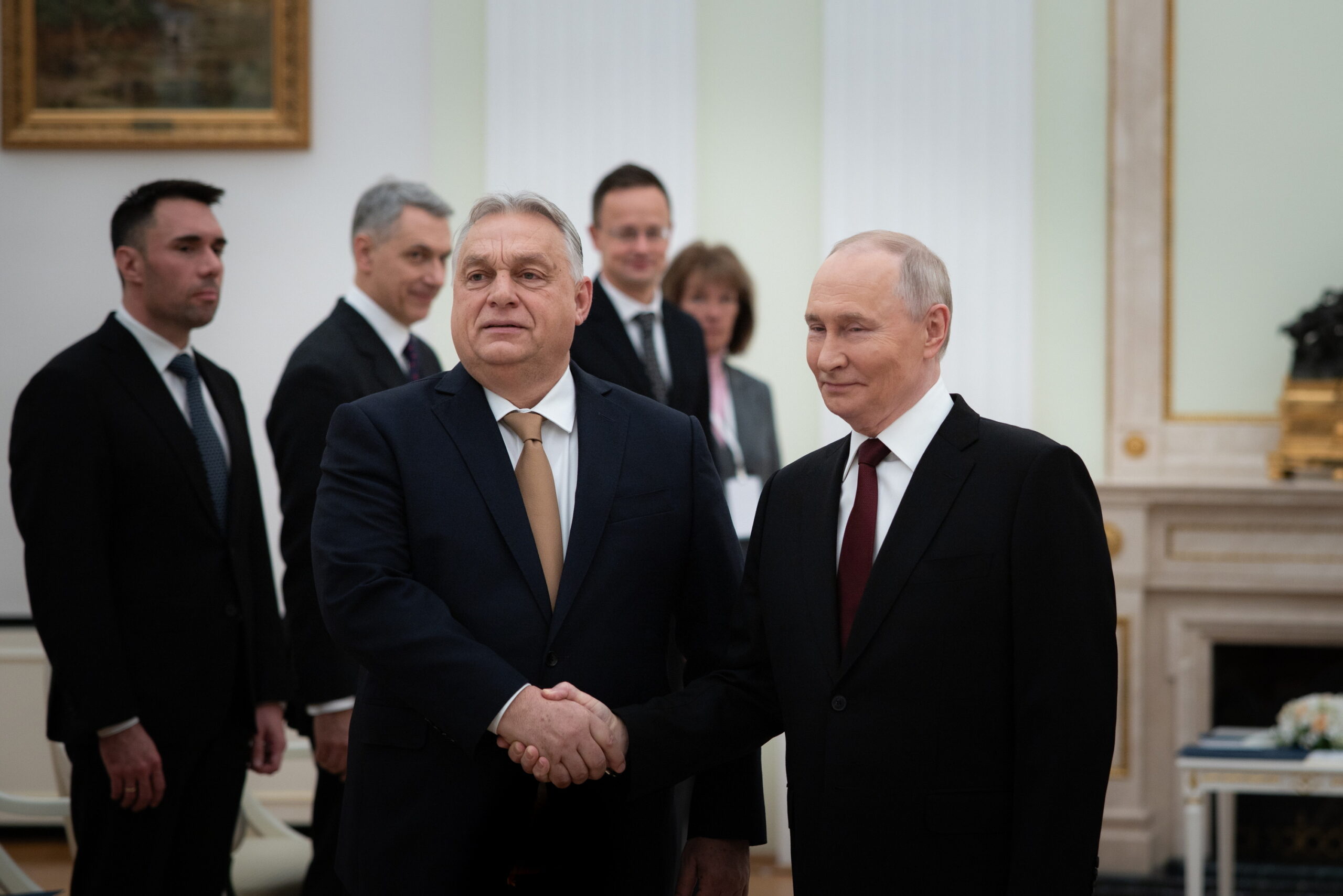
Meeting between Prime Minister Viktor Orbán and Vladimir Putin at the Kremlin in Moscow on November 28, 2025. Photo: MTI
Hungarian Foreign Minister Péter Szijjártó visited Moscow much more frequently during the full-scale war. Since February 2022, he has traveled to Russia a total of 16 times. The official reasons for these visits were negotiations on gas and oil supplies and Russia’s construction of a nuclear power plant in Hungary. What the Hungarians actually discussed in Moscow is unknown.
Viktor Orbán intended to visit Moscow again in March of this year. On March 3, he called Putin. Following that conversation, it was reported that he intended to visit Russia after Szijjártó’s visit.
Among other EU government officials, only Austrian Chancellor Karl Nehammer has visited Russia once during the full-scale war. He traveled to Moscow on April 11, 2022, and described his trip as “not a friendly visit, but an attempt to make direct demands regarding the cessation of the war and the investigation of war crimes in Bucha.”
Also, on February 3 of this year, the chief diplomatic adviser to the French president, Emmanuel Bonne, traveled to Moscow. He met with Russian Presidential Aide Yuri Ushakov. The visit aimed to involve European countries in negotiations on European security. Officials in Paris noted that this visit had been coordinated with Ukrainian President Volodymyr Zelenskyy.
Szijjártó may have been briefing Russia on EU negotiations, while a Hungarian intelligence network was operating in Zakarpattia
The Hungarian leadership’s ongoing contacts with Russia have been the subject of sustained criticism from Brussels and other EU countries. Following the Washington Post report, Polish Prime Minister Donald Tusk wrote on X: “The news that Orbán’s people inform Moscow about EU Council meetings in every detail shouldn’t come as a surprise to anyone. We’ve had our suspicions about that for a long time. That’s one reason why I take the floor only when strictly necessary and say just as much as necessary.”
The news that Orbán’s people inform Moscow about EU Council meetings in every detail shouldn’t come as a surprise to anyone. We’ve had our suspicions about that for a long time. That’s one reason why I take the floor only when strictly necessary and say just as much as necessary.
And last May, the Security Service of Ukraine uncovered an entire spy network in Zakarpattia, which was overseen by Hungarian intelligence officers. In addition to studying the socio-political sentiments of the population of Zakarpattia Oblast, the agents gathered information on the locations of air defense systems and other military facilities, the staffing of military and law enforcement units, and so on. It is currently unknown whether Hungary shared this data with Russia, but given the constant contacts between the leadership of Hungary’s foreign ministry and Russia, this possibility cannot be ruled out.
The Kremlin will attempt to interfere in the Hungarian elections
According to opinion polls, Viktor Orbán’s Fidesz party is currently trailing the opposition TISZA party by 8–12%. Moreover, the ruling party’s ratings continue to fall.
According to information from The Financial Times, the consulting agency “Social Design Agency,” at the Kremlin’s behest, has developed a social media strategy aimed at improving the position of Orbán’s party ahead of the elections. The agency is overseen by leading Russian political strategists, including some from the Russian Presidential Administration.
Expert: Orbán is using the country’s EU membership to retain power
“There is nothing surprising about Viktor Orbán behaving exactly this way,”
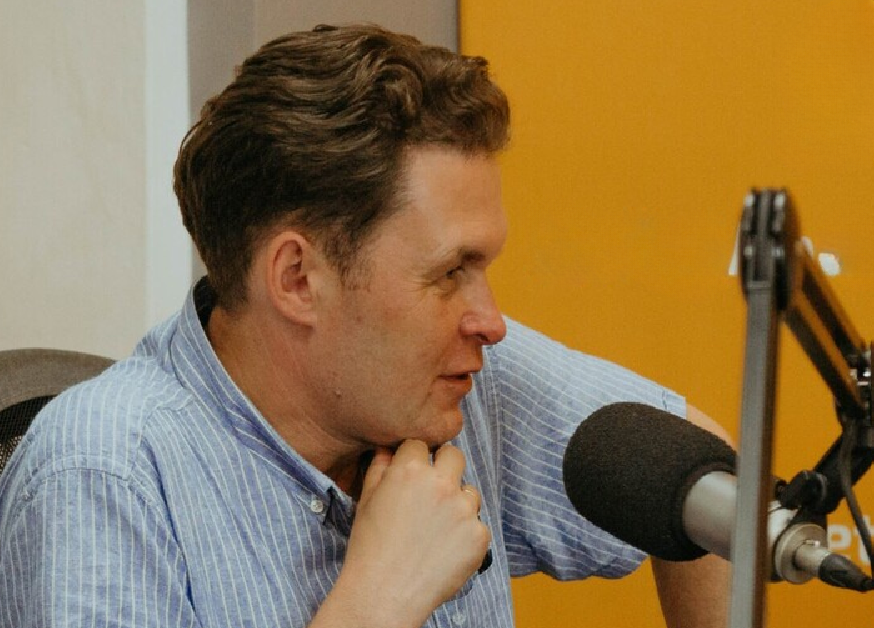
– says political scientist and director of the Ukrainian Institute of World Policy Yevhen Mahda, who commented on Hungary’s actions for “Black Sky.”
Yevhen Mahda
“It must be said that he is not only maneuvering between Putin and Trump, paying them compliments, but is also quite actively cooperating with Xi Jinping—Chinese investments in Hungary are quite substantial. I think he blackmailed the European Union with the prospect of Hungary leaving the bloc, and this frightened Brussels officials. And that is why they are behaving quite cautiously. Orbán is not merely an agent of Russian influence. He is a man who uses Hungary’s membership in the European Union to preserve his power, and he does so quite successfully.”
Yevhen Mahda believes that the European Union cannot influence Orbán’s contacts with Moscow:
“Because, for example, French representatives also flew to Moscow, but no one said anything to them about it. And in this case, it doesn’t matter that they were merely diplomatic advisors to Emmanuel Macron. The Hungarians know European Union legislation very well and act within these frameworks very competently.”
“Druzhba” as a casus belli
The expert considers the situation with the “Druzhba” oil pipeline—which stopped supplying oil to Hungary in January of this year following a Russian missile strike on the “Brody” oil pumping station—to be a casus belli, or “cause for war.” On March 19, Orbán stated in this regard that Hungary would not unblock any EU decision favorable to Ukraine.
“If we recall how the situation unfolded, we can say that, in fact, the uproar over ‘Druzhba’ began a few weeks after the Russians struck it. And I am certain that this was a coordinated action. But how significant is this now? It is just one of the pretexts. We see that Orbán has mounted a full-scale campaign of criticism against Ukraine. And not just Ukraine. It is important to note here that for several months now, there has been a campaign against Zelenskyy and against Ursula von der Leyen. The calculation is that Zelenskyy will react—and he did—while Brussels, on the contrary, will remain silent—and it is silent. Therefore, it must be said that, strategically, everything is correct,” says Yevhen Magda.
Will such a pro-Russian strategy bring Orbán victory in the elections?
According to Yevhen Mahda, it is still difficult to say whether such an openly pro-Russian, anti-Ukrainian, and at times anti-European strategy will work in Hungarian society during Orbán’s election campaign:
“One must understand that Viktor Orbán’s actions are highly targeted. Over the years in power, he has come to know his audience well and targets his actions specifically at them, making the necessary calculations. And Ursula von der Leyen and Volodymyr Zelenskyy are sparring partners for him who cannot respond. Like mannequins. That is why he takes these actions quite sharply. I believe this process will continue.But whether this will pay off, we’ll only see on April 12. Because Hungary has a mixed electoral system—45% based on party lists and 55% based on single-member districts. So, despite all the polls coming out now, I wouldn’t say for sure whether Orbán’s strategy will be successful.”
To provide you with the best experience, we use technologies such as cookies to store and/or access information on your device. Consent to these technologies will allow us to process data such as browsing behavior or unique identifiers on this website. Not consenting or withdrawing consent may adversely affect certain features and functions.
Functional
Always active
The storage or access to technical data is strictly necessary for the legitimate purpose of enabling the use of a specific service explicitly requested by the subscriber or user, or solely for the purpose of transmitting a communication over an electronic communications network.
Preferences
Storage or technical access is necessary for the legitimate purpose of storing preferences that are not requested by the subscriber or user.
Statistics
Technical storage or access that is used solely for statistical purposes.Technical storage or access that is used exclusively for anonymous statistical purposes. Without a court order, voluntary compliance by the internet service provider, or additional records from a third party, information stored or retrieved solely for this purpose cannot normally be used to identify the user.
Marketing
Storage or technical access is required to create user profiles for the purpose of sending advertisements or tracking the user on a website or across several websites for similar marketing purposes.