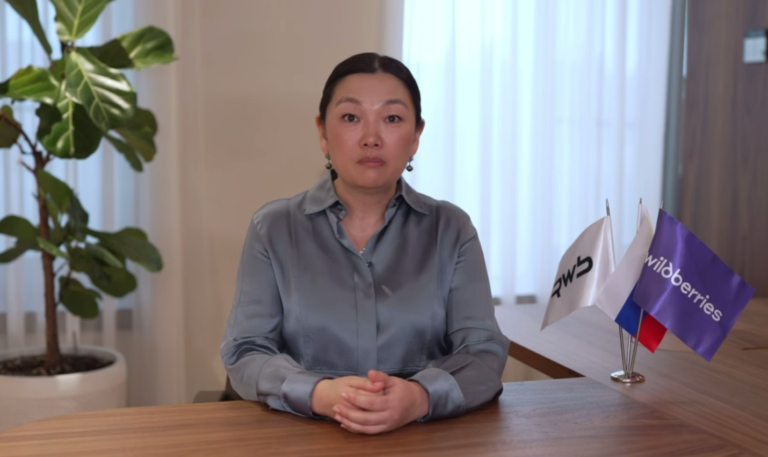

In 2024, Wildberries CEO Tatiana Kim agreed to a merger with the Russ Group, as a result of which she effectively lost control of the business and its revenues. By the end of 2025, nearly all of the merged company’s net profit went to Kim’s new partners, while the marketplace’s founder herself didn’t receive a single kopeck.
At the same time, the company entered 2026 with massive liabilities and minimal liquid assets of its own. Following the Ukrainian attacks, the damage from which is estimated at hundreds of billions of rubles, Tatiana Kim turned to the government for help.
In brief:
- The net profit of the merged company, RVB LLC, in 2025 amounted to 55.32 billion rubles. Almost the entire amount went toward dividend payments
- Wildberries’ parent company was supposed to receive about 33.4 billion rubles, but Tatiana Kim never saw that money
- All the funds went to minority shareholders, including anonymous shareholders
- Following Ukrainian drone strikes on Wildberries’ warehouses, the damage could amount to hundreds of billions of rubles
- RVB LLC does not have such funds; the company itself is in debt
- The founder of Wildberries has already appealed to the government for help
- Investigators claim that the company was saved from even greater losses by the patronage of Kremlin officials. They warned of the impending strikes, and the company changed its insurance policy, thereby avoiding insurance payouts
Kim was left without dividends
BlackSky previously reported that in 2024, as a result of Wildberries’ merger with Russ, Russia’s largest outdoor advertising operator, a new legal entity—RVB LLC—was created. The shares were distributed as follows: 65% to Wildberries LLC and 35% to STINN LLC, which is affiliated with Russ. The CEO of the new company became the head of the Russ Group, Robert Mirzoyan. In other words, even though Wildberries held a controlling stake, management of the new company ended up in the hands of a representative of its partner.
According to data from the 2025 financial statements, the combined company’s net profit amounted to 55.32 billion rubles. Almost the entire amount—51.4 billion rubles—was used to pay dividends. According to the articles of association of RVB LLC, the company’s profits are distributed in proportion to the participants’ shares in the authorized capital; that is, the parent company Wildberries was supposed to receive approximately 33.4 billion rubles. However, businesswoman Tatiana Kim never saw this money.

All funds went to the “predominant business entity,” which is STINN LLC. STINN is headed by Robert Mirzoyan, CEO of RVB LLC. He holds his stake through his former driver, Grigory Sadoyan—who owns 50% of the company’s authorized capital. The other 50% is owned by “UK Emris” LLC. This company manages a dozen mutual funds, the ultimate beneficiaries of which are not disclosed. It was these anonymous shareholders who received half of the dividends paid by “RVB” LLC—24.3 billion rubles. The same amount was paid to Grigory Sadoyan.
The Kremlin’s Shadow
According to several Russian media outlets, the ultimate beneficiary of the Russ Group is billionaire Suleiman Kerimov, while the Mirzoyan brothers are described as managers representing his interests. To gain control over Wildberries, Russia’s largest marketplace, the oligarch had to engage in a public confrontation with Chechen leader Ramzan Kadyrov. Kerimov secured the Kremlin’s support and ultimately emerged victorious, although he was later forced to pay Kadyrov “compensation.”
Among Kremlin officials, the Russ Group is linked to Anton Vaino, head of the Russian presidential administration, and his first deputy, Andrei Gromov, who oversees state media and information policy. Gromov’s son, Danila, was hired in 2021 as deputy director for development at Russ Outdoor LLC. And although he officially resigned from the company in February 2022, data from tax leaks confirm that he continued to receive payments from Russ, according to an investigation by the “MO” Explainer project. In the first half of 2025, during the merger of the companies, he was paid 3.65 million rubles per month—14 times the average salary at the company and five times his own income for 2023.
In addition, the publication claims that it was precisely the high-level patronage and personal interest of Presidential Administration Head Vaino and his first deputy, Gromov, that saved Wildberries from massive losses following the Ukrainian drone strikes. Allegedly, the officials may have received military intelligence indicating that Ukraine was preparing to strike the warehouses—which explains why the company changed its insurance policy two weeks before the first attacks, thereby avoiding insurance payouts.
Who Will Pay for the Damage
Since June 18, Ukrainian drones have been attacking Wildberries’ logistics centers and warehouses almost every day. The company’s facilities in the Moscow Region, Tambov Oblast, Krasnodar, Stavropol Krai, Leningrad Oblast, St. Petersburg, Voronezh, Ryazan, and the annexed Crimea have already been hit.
Neither the marketplace itself nor the sellers are yet able to assess the losses. Wildberries founder Tatyana Kim stated after the first attacks that taking inventory of the losses would take about 30 days.
“A conservative estimate” of remaining inventory at just the two warehouses affected by the first attack—in Elektrostal and Kotovsk amounts to 150–170 billion rubles,” market experts say. Restoring the warehouse infrastructure alone will cost more than 20 billion rubles.
RVB LLC is unable to cover the damages with its own funds. The company has only 2.4 billion rubles in equity remaining, while its debt to banks has reached nearly 830 billion rubles.
The marketplace has already appealed to Russian authorities for support. As reported by Reuters, assistance for sellers is being discussed, as well as tax breaks that would help Wildberries compensate the affected entrepreneurs.
According to the agency’s sources, state-owned banks—including VTB, which previously announced an alliance with Wildberries—could play a key role in saving the company.
Russian Presidential Press Secretary Dmitry Peskov confirmed that the government is “looking into this matter” and is “in contact” with Wildberries.
Author: Olga Semashko
Official Russian and Belarusian sources cited in this text are for informational purposes only. Content from these sources may constitute disinformation or propaganda.